Frequent visitors to this blog will notice that we have gotten a bit of a facelift -- a few items in the sidebar have moved around, and we've gotten a new header. I liked the old one, but the Internet, in its infinite wisdom, seems to have misplaced it, so I spent a bit of time this morning making a new one. I have to say, I think it's an improvement on the old.
This sudden disappearance of my banner (and the rather un-sudden way in which I discovered it was missing) has reminded me that I need to devote a little more time to this blog. The last post was nearly two months ago, and it was, very helpfully, a cry for help.
Let me update you all -- I am fine now. After the kind words of many friends, I was reminded that I do have a place in this world and that it is a fine and noble one, and that it is perfectly acceptable to be unsure about one's path in life.
I still don't know what I want to do for grad school -- it still seems like an awful lot of money with very scant promise of a better job at the end of the road. So I have devoted myself to other projects. Yesterday, for instance, being one of my first days off in a long while, I began a sewing project that I purchased the materials for in November -- a walking skirt for one of my living history museums. Five hours later, my pile of fabric now resembles a small tent-like skirt. I've begun following a lot of historical costuming blogs, which you can see on the sidebar towards the bottom.
I have also started planning my staycation. In August, two of my good friends from college are coming into town and I, as the only 'local' of the group, have been asked to give a walking tour of the downtown on one of the days they will be staying here. Since I love my city and its history, my next trip to the library will be for books so I can continue researching into giving a brief but interesting view of Chicago's history and architecture, two things I love. It will be a much needed break and an opportunity to catch up with some folks that I haven't had a decent conversation with in over a year.
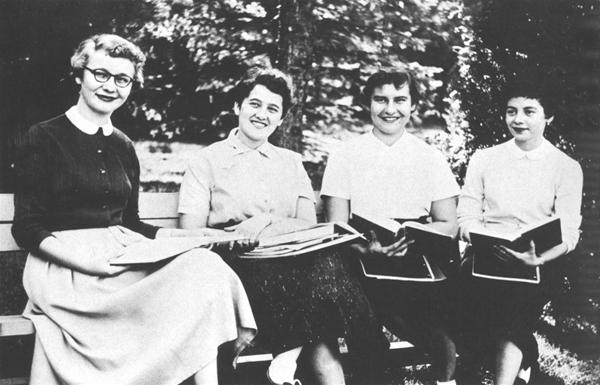
Since starting my sewing project yesterday (and finding it a little less difficult that originally imagined) I have also been thinking a lot about a project that's been on my mind for a little while now. Next year, my college is celebrating it's 100th anniversary. Since 1913, they have been educating young women like myself and training them for all kinds of professions, and let me tell you, the life of college women has changed a great deal since then. (For instance, women now outnumber men at colleges across the country, which would have been hard for the class of 1913 to believe.)
So many of the costuming blogs I've been following talk about different reasons for making these clothes -- attending new events, coming up with new stories, or sometimes simply just for the fun of it. As a living historian (or at least someone interested in living history) I think it would be enlightening to attend the centennial next year in the same type of clothes that a girl coming to college in central Minnesota would have worn in 1913, and talk -- to goodness knows who -- about the student experience in those very early years. I know that one of our history professors will be publishing a history of the school that I am very anxious to read, but so often the material experience of the past is what really gets people hooked in. How would my school experience have changed if I had to go to class in the sweltering heat of Minnesota late summer if I had to be dressed like these young ladies?
Curse the college website for not having more pictures from the early 1910s. Well, I have to email the archivist anyway. So it is onward and upward for me, and hopefully, for all of you as well!
Sunday, June 17, 2012
Tuesday, April 24, 2012
Any Help You Can Give In This Matter Would Be Invaluable.
I had a bad day today. I am trying to figure out why.
My day didn’t begin badly. By all accounts, it was actually
a really good day until about two in the afternoon, when I went in to have a
talk with my boss about data entry for our volunteers. And somewhere in the middle
of that meeting, my day exploded, and I have no idea why.
We’d finished talking about everything we had to talk about.
We’re both new, we’ve inherited a system we don’t like, and we’re trying to fix
it. We’d both like it fixed now, but it’s becoming apparent that an immediate
solution is not happening. I think he’s getting more frustrated than I am by
this, but he’s paid more to be frustrated. I feel that I am paid to do grunt
work and figure out solutions to these problems before they become problems, so
I always feel responsible when a solution I come up with doesn’t fix things.
This is the way my mind works.
After we have finished discussing this, he abruptly asks me
what I do at my other job. I am taken aback. I always feel as though I am
giving the wrong impression when I talk about my other job while I am one place
or the other. I explain that I give tours and do a small amount of research.
Then he asks me what I want to be doing in five years.
And I proceed to burst into tears.
The last time I remember bursting into tears in a completely
unnecessary situation was in 8th grade. I’d been called on the
carpet for doing really poorly on a math test, and when the teacher asked me if
I needed help, I started crying. In front of the whole class. Several people
started laughing at me. Which is understandable, looking back several years,
but in 8th grade, being laughed at in math class for crying is something you continue crying about. It
wasn’t that the teacher was criticizing me for anything – she had a legitimate
desire to understand what was wrong and why I hadn’t done well. And I had a
legitimate desire to…something. I’m not sure what it was at the time. I think,
knowing what I know about myself know, that it was a desire not to create a
fuss. I wanted to be independent, and to admit, to the teacher who was supposed
to be teaching me these things, that I had not understood it, had not asked a
question about it, and imply that however she was teaching it didn’t make sense
to me, was more than my pride could stand. Hence, the bursting into tears.
I think that’s why I started crying today. Here is my boss,
a man that I have known for about a month now but who continually amazes
me with his willingness to grab a problem
by the throat, to think in big pictures and who has worked at some of the
largest and most reputable museums in the world, and he is
asking me what I want to do with my life. Because, as both of us know
and neither of us will say, I cannot stay working two part time jobs forever.
There are other things that go into the crying besides that.
There is the implication that I still need to make something of myself, the
realization that I do not actually have a good answer to his question, the implication
that going to grad school takes money I do not have and my parents will be
unable to help me because they’ll be sending three children to college this
fall, and my mother is getting a second job to help with that. But mostly, it
comes down to the fact that I am a little ashamed of myself for not having a clue
where I want to be in five years.
Now, that is not entirely true – I have a very good idea of
where I want to be in five years. I would like to be a museum educator in a costume
somewhere cooking over a woodburning stove or darning socks or making butter--
creating, manipulating, or explaining some physical product so that children will
understand what life was like in the past. The problem then becomes a question of
how to get there.
I get asked a lot at the lobby desk whether I have a degree
in history. I always feel ashamed when I say that I don’t, my degree is in
English, but I really love museums. I never get a good feel for what people
think about that, but after I say it, it always comes with a sense of failure.
I’m not doing something related to my degree. I spent four years on nothing. I
have a teaching certificate I don’t want to use.
I have good reasons to say all these things, and I’m not
lying, and yet I still feel guilty about saying them. Some part of me feels
like I’m not allowed to go for a museum studies degree. I haven’t earned that privilege
by writing lots of papers or slaving over a thesis or spending months on end
doing original research. I don’t have the right background. I am unworthy of a
professor’s time.
Which is what finds me in my boss’s office on a Tuesday afternoon
crying for a five year plan I don’t have. Let me say it is a credit to my boss
that he maintained his calm as I proceed to blubber and cry for the next twenty
minutes and explain this mishmash of ridiculous reasons why I am in tears in
his office after an absurdly simple question. It is also a credit to him that
he made sense out of all of it, addressed my fears about being fired and a
failure and bad at my job, and somehow maintained his aura as one of the nicest
human beings I will ever have the pleasure to meet in this universe, and
probably the next several universes as well.
I finally stopped crying. I blew my nose several times. I
went back to work for another hour. And then I got in the car to go home. I
plug in my Ipod, and Rufus Wainwright’s “Hallejuhah” comes on. He’s singing
about David’s psalms and the secret chord that David played to please the Lord
and I start crying again. And I let
myself cry, and somewhere in the midst of that silent, sobbing wreckage there
is a prayer in there of some kind or another. It probably doesn’t sound like much,
more an emotional cry to the universe
and whatever version of the Deity is listening that I need help, and I just need
someone to listen for a moment. I
realize while I am crying and driving that I have been living hand-to-mouth in
the way of life experiences for the past three months. I go to work and I go
home – that’s it. I have not taken myself out to do anything un-work related. I
have not had a legitimate conversation with anyone outside my family or my
coworkers in months, and I have not talked about or discussed my emotional
health, my plans for the future, or
something other than history with anyone pretty much since I got home from
college. I have no friends in the immediate vicinity to talk to, and I am too
afraid of interrupting anyone else’s life to call them.
Just when I’m getting over “Hallelujah” Coldplay’s “Fix You”
comes on, and I am still in tears, and wondering what crazy program is picking
all these songs I can cry about, because after that Regina Spektor serenades me
with “No One’s Laughing With God” and
between these three songs, I spend my fifteen minute commute in tears. I
park my car, I go inside, my mother asks me if I am okay, and I respond with a
heart-shaking ‘NO’ and start crying again.
This is the last thing I wanted to do, and I make even less
sense of the reasons behind why I am crying as I explain to my mother. My
mother has enough problems in her life – she does not need any of mine. I am
her oldest child. I have a college degree. I should be able to take care of
myself. Yet I am living at home, still letting her cook me dinner, still living
on my parent’s good grace. Yet I am still her problem. And I am crying in her
office, trying to explain why I spent a good forty five minutes of my afternoon
in tears. It doesn’t make as much sense to her as it does to my boss, because I
don’t talk about the second job thing (she didn’t have to get a second job to
send *me* to college) and I don’t do a very good job of explaining my guilt
about the scheduling conflict between my two jobs, because she keeps telling me
if that happens too often someone’s going to fire me, which leads back to that
sending three kids to college problem, and I’ve figured out the less I say
about calendars in her presence the better it will be for the both of us.
She gives me the answers she always gives – maybe your boss
is right. Maybe you do need to make a plan. Maybe you need to look at museum
studies programs. Maybe you need to move. Maybe you need to give up one of
these jobs. All these things make sense, but they do not comfort me. Moving,
museum studies programs, plans down the road, all of these things require
money, and money is something I do not have a lot of. The newspaper reminds me
of this nearly every day. I am part of the generation who seems to know awful
well how to spend money for education, and doesn’t know a thing about getting
an education they can actually use, or a job that will make it worthwhile. It’s
this realization that scares the shit out of me. What if I’m just another
college graduate getting a Master’s Degree that I can’t pay for? Why not stay
where I am with my two jobs I have to juggle like a crazy person and build a little
insulated place for myself where I save a little, spend less, volunteer, and
try to be a nice person?
I try to tell her that I feel like I am not setting a good
example for my siblings, and this, at least, she understands. She leaves me
alone for twenty minutes to write this blog post, and then returns downstairs
and tells me that what she thinks is really bothering me is staying at home.
This is probably true. Maybe I do need to move. Maybe I do need to start
looking at jobs outside the state of Illinois.
But before I do any of that, I would like to talk with someone.
I would like to talk with ANYONE. I would like to see if my fears make sense.
As I seem to end all my emails at work, “Any help you can
give in this matter would be invaluable.”
Saturday, March 24, 2012
So You Think You Can Sew: My First Adventure in Costuming.
One day I'll have a real costume blog, where I talk about real costume projects.
One day. Unfortunately, it's not today, and it's certainly not this blog post. Today I want to share my much-less-than-legit excuse for a costume project, a project that required not so much skill as creative thinking on how to make a costume I'll probably only wear once but not make break the bank and not make it look totally lame, either.
There's a dictum in manufacturing that you can have quick, cheap, or good-looking, but you can't necessarily have all of them at once -- we'll see how I did here.
The Assignment: For volunteer appreciation at one of my museums this year, their theme is "Out Of This World" and the volunteer coordinators invited everyone to come in the 'space-themed' costume of their choice. Since no one but the Browncoat, conventioneering crowd would recognize my Mal Reynolds costume from last Halloween, and making a Jedi costume on a budget became next to impossible outside of Halloween season, I decided to make that tried and true staple of the space adventure canon -- The Starfleet Uniform.
Step Three: Find Gold fabric, gold paper, black puffy paint, and several copies of the starfleet insignia. Have momentary debate over whether it needs to be the Command insignia or the Sciences department insignia. Father reminds me no besides me will probably notice this, and Command insignia is the one everyone recognizes. Now, which size to use?
On next week's episode of "So You Think You Can Sew?" Mercury attempts to make a six-gored skirt out of corduroy...
One day. Unfortunately, it's not today, and it's certainly not this blog post. Today I want to share my much-less-than-legit excuse for a costume project, a project that required not so much skill as creative thinking on how to make a costume I'll probably only wear once but not make break the bank and not make it look totally lame, either.
There's a dictum in manufacturing that you can have quick, cheap, or good-looking, but you can't necessarily have all of them at once -- we'll see how I did here.
The Assignment: For volunteer appreciation at one of my museums this year, their theme is "Out Of This World" and the volunteer coordinators invited everyone to come in the 'space-themed' costume of their choice. Since no one but the Browncoat, conventioneering crowd would recognize my Mal Reynolds costume from last Halloween, and making a Jedi costume on a budget became next to impossible outside of Halloween season, I decided to make that tried and true staple of the space adventure canon -- The Starfleet Uniform.
Instantly recognizable even by people who don't call themselves sci-fi fans, comfortable enough to sit through dinner in, and low-budget enough for, well, the first season of a groundbreaking TV show, this was something even I could do. Let's face it -- I'm an English major, Jim, not a seamstress! (At least not yet. But we'll get there. Yes, we will.)
Step 1 -- Acquire shirt. Remind myself while watching several episodes of Star Trek who wears blue, yellow, and red. Went to Goodwill. Found them having a sale on red turtlenecks from Target. Make executive decision not to be a redshirt. Find really nice blue cowl-necked shirt that reminds me of Dr. Dehner from Episode 1.1 "Where No Man Has Gone Before."
Step Two -- Acquire gold braid for rank insignia on the sleeves, and something with which to make the Enterprise Insignia to cover up the logo on this shirt. Find gold metallic thread in Mom's sewing box. Score one for budget conscious projects and using what you have in the house!
My desk. It is messy.
The fabric itself is a stretchy sports fabric, and I want to be able to roll up my sleeves. Solution -- pin braid on while fabric is stretched out over empty wine bottle. I can keep the braid straight this way, too.
Step 2.5 -- Decide which rank to assign Starfleet-self. Since Captains can't wear blue, I go for Lieutenant. Proceed to think about Master and Commander for the rest of the braid-sewing exercise and remain amused by the British pronunciation of Lef-ten-ant.
Lots of pins gave their lives for this uniform....
Six episodes of Star Trek and two feet of braid later, Progress! But wait. We appear to be missing something, Captain!
Ah, yes, one of those.
Step Three: Find Gold fabric, gold paper, black puffy paint, and several copies of the starfleet insignia. Have momentary debate over whether it needs to be the Command insignia or the Sciences department insignia. Father reminds me no besides me will probably notice this, and Command insignia is the one everyone recognizes. Now, which size to use?
The one on the right is the smaller (2.5 inches tall) version, made with a gold plastic paper from my scrapbooking box -- I think it was used as a gift bag filler at some time. The larger one on the right is wide gold ribbon glued over a cardboard backing (3.5 inches tall). Both models will have the insignia done in the black fabric paint using a stencil. It's also been drawn onto the cardboard backing of the fabric one.
Voila! Semi- finished uniform shirt! (That's one of my paper copies of the insignia there.)
So, for less than ten dollars -- five for the shirt, two for the spool of gold braid, two for the puffy paint and an extra dollar to factor in the things I found around the house -- I created a costume that doesn't look half-bad. We'll factor in another ten to fifteen dollars for some black boots I have yet to find, and for less than twenty dollars, I've created something I wouldn't mind wearing.
Not a bad week's work.
On next week's episode of "So You Think You Can Sew?" Mercury attempts to make a six-gored skirt out of corduroy...
Friday, March 9, 2012
Putting Down Roots -- Adventures in Genealogy and other Storytelling Endeavors
This is supposed to be a writing blog, and as I look back at
the last few posts, many of them don’t have a thing to do with writing. To be
perfectly honest, there hasn’t been a lot of writing going on at my computer in
the last few months. My time is being spent in a lot of other places, and while
I may not have been writing, I am finding out a lot of different ways to tell
stories.
Since graduation, I’ve started volunteering (and then
working) at two different historic houses. One of them was built and inhabited
by famous rich people and the other, built at about the same time about ten
miles down the road, was built by non-famous, nonrich people. The purpose of
both museums is to tell a story – for the famous house, it is a very specific
story of a very specific person, while at the other, the story is supposed to
be more general, a picture of what life would have been like for hundreds of
families working on farms in Northern Illinois in the 1890s.
But in both
houses, the object of giving a tour is to tell a story – using objects in the
home and facts about daily life. The tours I give for both houses are vastly different,
but I believe one of my strengths as a tour guide comes from my knowledge of
story-telling – having the ability to draw people in with objects or events
that are of interest to them, and bringing to their attention parts of the
houses’ story that they can connect with. At the big house, I had to give a
tour yesterday to a group of fifth grade boys. I skipped talking about the
influential women in the house’s history (and they were all characters, let me
tell you!) and focused instead on the military service of the man who left us
the house.
The other project I’ve been working on a lot in the past
several weeks is my family genealogy. Unfortunately for me, my family (both
sides) does not seem to be one who believed in saving photographs or death
records or anything material that would help me learn about the kind of people
my great grandcesters were. All I’ve been looking at are digitized census
records, but, when read in chronological order, they form their own little
black and white narrative, playing out like the best reel-to-reel melodrama.
Every ten years, there is an update to their lives. What children have moved
out of the house? Have they finally paid their mortgage? Has someone’s job
situation changed?
As strange as it sounds, I feel like I know these people now. I mourned for the women who listed '3 children birthed, 1 surviving' on the 1910 census return. I practically stood up in the library and cheered when I
found naturalization records for my great-great grandfather and his two
brothers. After twenty years of living in the United States, they were finally
citizens. They owned their houses. Their children were thriving. Three young
men who came from Bremen, Germany, to the port of Baltimore in 1886 and 1889
with nothing more than a piece of luggage each were making their way in the
world.
In many of the stories I write, as well as the stories I read,
a great deal of emphasis is placed on family trees – on where people have come
from, what their parentage and connection is. I don’t have anyone famous or
well-connected in my family tree – my grandcesters were carpenters and masons,
seamstresses and cooks, farmers and textile mill workers, mothers and fathers. But
the fact that the story is there – and that I can find it, and read it, and
share it with my family – is comforting. I’m proud of my great-great grandfather
the carpenter and his wife with no occupation except raising her 12 children. To
me, they are famous – I want to tell everyone all about them! I come from the
library and tell my parents all about these relations of ours like I just sat
down for coffee and got an update from them on how the family’s doing.
Another one of my projects in the coming days is to make a
new skirt and shirtwaist for my costume for the non-famous house museum. As I’m
making it, I’ll be thinking a lot about the stories I’ll tell while wearing it,
but I’ll also be thinking a lot about the women in my family who would have
dressed similarly while going to their own jobs. And in a small way, even though they lived hundreds of miles and a hundred years away, I’ll be telling their
story, too.
Sunday, February 19, 2012
Hello, 1920! Surviving after the Downton Abbey Season Finale.
By 9 PM Central Standard time tonight, my family and myself will be in a state of heavy sadness. Why? Because Downton Abbey is done for the season. No longer will we be able to sit around the TV and watch the Crawley family be brilliantly troubled, or shout at the TV when our favorite characters do something we dislike, or discuss over breakfast just why O'Brien is so evil or why Mary is still insisting she marry Carlisle even though we all agree he's a total creep and Matthew is so much better for her.
My mother, in particular, is practically up at arms that she has to wait for season three, and has even proposed a trip to England so we can watch it before everyone else. No joke. So, to make sure she and I do not go stir crazy during our Downton Abbey-less downtime, I've come up with a list of things that we (and you guys reading at home!) can do to tide yourselves over until season three.
1. Read a good book.
If you're me, you've been doing this all season long, but since most people don't voraciously research their costume dramas, our hiatus between seasons is a perfect time to catch up on the historical nuances that inform this show. You could read more about the Buccaneers, the generation of young american women who went over to England, like Cora, to marry the English for their titles, by picking up Edith Wharton's book of the same name, or by checking out Marion Fowler's In A Gilded Cage: From Heiress to Duchess, which details the lives of 5 American women who married dukes. (It comes highly recommended by me!)
If you're interested in learning a little bit more about the real life events inspiring the shenanigans of the Crawley Sisters and women like them, try reading Fruits of Victory: The Women's Land Army of America in the Great War (for Edith fans especially) American Women in World War One (Which I am in the middle of reading for the second time right now, it is so good) or a more general book like Juliet Nicolson's The Great Silence: Britain from the Shadow of the First World War to the Dawn of the Jazz Age.
I'm really excited about the next season because we're heading into the 20s! Yes, the Decade that Roared will be coming full force to Downton, and it should be fantastic. You could read about the new direction of high society by delving into Bright Young People, a biography of the jazz babies and flappers that really made the older generation role their eyes in the late twenties. (I really liked Bright Young People, and I recommend it highly.) If you're not one for nonfiction, try Evelyn Waugh's Vile Bodies, the novel that inspired Stephen Fry's 2004 movie about the Bright Young Things. I myself will be reading Anything Goes: A Biography of the Roaring Twenties in the next couple of days, which looks like it will be a real treat.
2. Make something.
Do Mrs. Patmore proud and try your hand at baking a period recipe or hosting a teaparty for all your nearest and dearest fellow Downton fans. There are a number of articles (like this one from the Huffington Post) and blogs like Downton Cooks which would help a fan find a recipe or menu to serve.
I myself will be spending time making a teacake stand for my viewing parties next season. What's a teacake stand, you ask? Well, here's Molesley holding a very sculptural example in season one --
Mine will not look nearly as nice (I'm taking the DIY approach suggested in this tutorial and using sherry glasses and plates from Goodwill) but it will be a conversation piece, I hope.
3. Revamp your closet.
You know your favorite TV show is a big deal when Ralph Lauren rolls out a collection inspired by it at New York Fashion Week.
Maybe we all don't have an RL compatible budget, but we can certainly take some design elements out of the DA book as easily as Mr. Lauren does. Cloche hats, wide legged pants, oxford shoes or french/spool heels, opera length gloves and long necklaces are all fairly easy to find in stores today. Indulge your inner Sybil and go find a frock that flatters and makes a bold statement. Polyvore is great for seeing what others have in mind when they think of Downton. There's a great tumblr out there, too -- Downton Abbey Fashion.
Oh, and if you're feeling really ambitions, the folks over at Reconstructing History have a number of patterns for you.
4. Watch another show in the meantime.
Sacrilege, some of you cry! Don't worry, it's just until next season.
The House of Eliott -- two sisters whose father has just died become couturiers and deal with the crazy world of fashion design in the twenties. Lots of beautiful dresses.
The Grand -- follows the life of the rich and famous living at a hotel in Manchester. Contains more drama than a busload of high school girls, but interesting to watch.
Birdsong -- Based on a novel by Sebastian Faulks, is going to be on Masterpiece Contemporary in the near future.
Titanic -- It's the 100th anniversary of the sinking of the Titanic in April. Where will you be? (I'd hate to be trying to fill a cruiseship in April of this year. Such bad press, that is.)
Casulty 1900 -- It's like Gray's Anatomy without the comforting idea that science will prevail by the end of the episode. I wasn't able to watch this show on account of period medicine being beyond my comfort zone, but I hear good things about it.
The Forsyte Saga -- I reread the book recently, but Soames isn't quite the same as when Damien Lewis is brooding over Irene's departure on my television screen.
Iron-Jawed Angels -- Go make Sybil proud and learn about Alice Paul and the women's movement.
5. Go read some fanfic.
There's some really great pieces of fic out there on the internets, and fanfiction.net is as good a place to start as any. If you are thinking there are plot points you would like to tie up, if you think all of Thomas' problems will be solved if he meets a nice boy, if you think you'd just like to read a little fluffy story where Robert and Cora muse some more about their children, or grandchildren, go make some fanfiction writer happy and read (and review!) their story. If my mother were a writer, this is totally where she would be.
Well, Downton Fans, there are your marching orders. Scamper off and invade tumblr. Lend out your DVDs to your coworkers. Make #downtonabbey and #downtonPBS the trending hashtags on Twitter. Go be the crazy, outrageous people we know you are. And have fun with it! See you for Season Three!
My mother, in particular, is practically up at arms that she has to wait for season three, and has even proposed a trip to England so we can watch it before everyone else. No joke. So, to make sure she and I do not go stir crazy during our Downton Abbey-less downtime, I've come up with a list of things that we (and you guys reading at home!) can do to tide yourselves over until season three.
1. Read a good book.
If you're me, you've been doing this all season long, but since most people don't voraciously research their costume dramas, our hiatus between seasons is a perfect time to catch up on the historical nuances that inform this show. You could read more about the Buccaneers, the generation of young american women who went over to England, like Cora, to marry the English for their titles, by picking up Edith Wharton's book of the same name, or by checking out Marion Fowler's In A Gilded Cage: From Heiress to Duchess, which details the lives of 5 American women who married dukes. (It comes highly recommended by me!)
If you're interested in learning a little bit more about the real life events inspiring the shenanigans of the Crawley Sisters and women like them, try reading Fruits of Victory: The Women's Land Army of America in the Great War (for Edith fans especially) American Women in World War One (Which I am in the middle of reading for the second time right now, it is so good) or a more general book like Juliet Nicolson's The Great Silence: Britain from the Shadow of the First World War to the Dawn of the Jazz Age.
I'm really excited about the next season because we're heading into the 20s! Yes, the Decade that Roared will be coming full force to Downton, and it should be fantastic. You could read about the new direction of high society by delving into Bright Young People, a biography of the jazz babies and flappers that really made the older generation role their eyes in the late twenties. (I really liked Bright Young People, and I recommend it highly.) If you're not one for nonfiction, try Evelyn Waugh's Vile Bodies, the novel that inspired Stephen Fry's 2004 movie about the Bright Young Things. I myself will be reading Anything Goes: A Biography of the Roaring Twenties in the next couple of days, which looks like it will be a real treat.2. Make something.
Do Mrs. Patmore proud and try your hand at baking a period recipe or hosting a teaparty for all your nearest and dearest fellow Downton fans. There are a number of articles (like this one from the Huffington Post) and blogs like Downton Cooks which would help a fan find a recipe or menu to serve.
I myself will be spending time making a teacake stand for my viewing parties next season. What's a teacake stand, you ask? Well, here's Molesley holding a very sculptural example in season one --
Mine will not look nearly as nice (I'm taking the DIY approach suggested in this tutorial and using sherry glasses and plates from Goodwill) but it will be a conversation piece, I hope.
3. Revamp your closet.
You know your favorite TV show is a big deal when Ralph Lauren rolls out a collection inspired by it at New York Fashion Week.
Maybe we all don't have an RL compatible budget, but we can certainly take some design elements out of the DA book as easily as Mr. Lauren does. Cloche hats, wide legged pants, oxford shoes or french/spool heels, opera length gloves and long necklaces are all fairly easy to find in stores today. Indulge your inner Sybil and go find a frock that flatters and makes a bold statement. Polyvore is great for seeing what others have in mind when they think of Downton. There's a great tumblr out there, too -- Downton Abbey Fashion.
Oh, and if you're feeling really ambitions, the folks over at Reconstructing History have a number of patterns for you.
4. Watch another show in the meantime.
Sacrilege, some of you cry! Don't worry, it's just until next season.
The House of Eliott -- two sisters whose father has just died become couturiers and deal with the crazy world of fashion design in the twenties. Lots of beautiful dresses.
The Grand -- follows the life of the rich and famous living at a hotel in Manchester. Contains more drama than a busload of high school girls, but interesting to watch.
Birdsong -- Based on a novel by Sebastian Faulks, is going to be on Masterpiece Contemporary in the near future.
Titanic -- It's the 100th anniversary of the sinking of the Titanic in April. Where will you be? (I'd hate to be trying to fill a cruiseship in April of this year. Such bad press, that is.)
Casulty 1900 -- It's like Gray's Anatomy without the comforting idea that science will prevail by the end of the episode. I wasn't able to watch this show on account of period medicine being beyond my comfort zone, but I hear good things about it.
The Forsyte Saga -- I reread the book recently, but Soames isn't quite the same as when Damien Lewis is brooding over Irene's departure on my television screen.
Iron-Jawed Angels -- Go make Sybil proud and learn about Alice Paul and the women's movement.
5. Go read some fanfic.
There's some really great pieces of fic out there on the internets, and fanfiction.net is as good a place to start as any. If you are thinking there are plot points you would like to tie up, if you think all of Thomas' problems will be solved if he meets a nice boy, if you think you'd just like to read a little fluffy story where Robert and Cora muse some more about their children, or grandchildren, go make some fanfiction writer happy and read (and review!) their story. If my mother were a writer, this is totally where she would be.
Well, Downton Fans, there are your marching orders. Scamper off and invade tumblr. Lend out your DVDs to your coworkers. Make #downtonabbey and #downtonPBS the trending hashtags on Twitter. Go be the crazy, outrageous people we know you are. And have fun with it! See you for Season Three!
Saturday, January 21, 2012
You Can't Put Nothing Past William Howard Taft: A Review of Jason Heller's "Taft 2012"
Those of you that know me could tell a lot of anecdotes
relating to how much I like free stuff. It’s a bit of an obsession, really. But
better than your everyday tradeshow swag (Stuff We All Get) is the free stuff I
have to work a little for – answering a trivia question, or giving my opinion,
or playing a game of bingo. One of my new favorite free things is the books I
receive from Quirk Books when they nicely ask for internet denizens to review
them. Two things occur when I get those emails – one, I get to help the
enterprising and creative people at Quirk sell more product, and two, free
book!
I’ll be the first to admit that I’m not as in-tune with the
political process as I should be. As a self-identified Democrat living with a
very conservative Republican father, it’s probably safer for me this way. That
said, I was a little leery of any book identifying itself as a satire of the
political process. However, I figured that any book about the guy who inspired
this song was worth looking into:
Yup. The Two Man Gentleman Band got me to read “Taft 2012”
and strongly encourage friends, family, and co-workers to DRAFT TAFT. In my
defense, I’ve read more serious books for sillier reasons, but in the long run,
I’m glad I read this quirky and surprisingly insightful look at the American political
process and the absolute circus it inspires every four years.
The premise of Jason Heller’s novel is fairly simple –
William Howard Taft disappears from the past without any reason whatever and
re-appears in the future – our future – just as election season is beginning.
After reacquainting himself with the world, getting in touch with his
great-granddaughter and her family, and doing a few rounds of the talk show
circuit, Taft finds himself in the middle of a grassroots movement focused on
getting him re-elected as president, a movement that forces him (and the
reader) to examine what the American political process has become.
At a volunteer dinner several weeks ago, one of my dining companions turned to me and
said, “Now, I know we’re not supposed to talk about politics at dinner, but who
are you thinking of voting for in the next election?” This was a hard question
for me to answer, since the place where I am volunteering was founded by a very
staunch Republican and I am, as mentioned above, of the Democratic persuasion.
I told her the honest truth – “Well, I voted Democrat in the last
election, but I really don’t know. It seems to me that politicians promise a
lot of things during campaign season and never follow up on them, so is it fair
to say, ‘He promised this and didn’t deliver’ when we know that always
happens?”
My dining companion seemed to view this as an acceptable
answer, and the matter was dropped, but the same situation came up in
“Taft 2012.” Throughout the book, Heller uses a mixed media format, drawing in
poll numbers, twitter conversations, and plain old prose to tell his story, and
one of those ‘mixed media’ pieces is a transcript of a political analyst’s TV
coverage of Taft. The excerpt explains
that the groundswell of Taft support is because he’s an ideal candidate who
will bring us back to the good old days of yore, as this campaign advertisement
will attest.
Taft is billed, in the beginning of the book and the
marketing campaign for the candidate/book, as the candidate who always
delivered on his promises and stuck to his morals, two things modern political
candidates seem to lack. Yet as the
story progresses, he finds himself being sucked into the circus just like the
rest of us, giving up on things he values to help his cause.
John Cass, an op-ed writer for the Chicago Tribune (a
strongly Republican leaning newspaper, interestingly enough, run way back when by the same man whose house I
was volunteering at for that volunteer dinner) wrote a piece about a week ago about why he thinks Obama will win the election. Simply put, Cass says that
Obama knows who he is and what he stands for, and the Republican candidates
running against him are so busy infighting amongst themselves that they’ve
forgotten to show the American public who
they are and what they’re about. Heller suggests at the end of his book
that this is the only way candidates can win in politics – when Taft realizes
that he’s forgotten who he was, he begins to work as a force for real change in
society.
If you, like I do, come from a family of mixed political
views, I think that “Taft 2012” is a great piece of writing to share with your
family. It provides a (somewhat surreal) way to talk about how crazy the
political process is, and it’s pretty amusing to boot. And even if you don’t,
Taft 2012 is still an amazing piece of literature, and one I’m grateful to have
read.
So, gentle citizens, get out and vote this November – and
remember, DRAFT TAFT.
You can buy Taft 2012 directly from Quirk Books, from your local independent bookstore, or from
Amazon, Barnes and Noble, or, if you’re lucky, you can try getting a copy from
a site like PaperbackSwap.
Saturday, January 14, 2012
Downton Recommends: An Edwardian Trip back in Time
This will probably be very obvious to anyone who knows me, but it bears putting down on paper: I am a very plugged in person. I read a lot of books, I follow a lot of blogs, I keep up with a number of news outlets, and I watch a lot – A LOT – of television and movies. I do this because I think it makes me a more interesting person, and also because I love having things to recommend to other people. Lately at my house the focus has been on – what else? – Downton Abbey.
I love PBS and the work they put on TV, because it is usually fun to watch and also because, unlike much of mainstream television, their shows can usually be counted on to be something I can watch with my parents. (A lessening commodity, let me assure you.) My parents – my mother in particular – are very selective about what they will and won’t watch, and in an era where swearing and sex are becoming more commonplace on broadcast television, PBS usually pulls through for me with something that has no swearing, no sex, and no dubious scenes in dubious places like dark allies, strip clubs or seedy bars. It helps that my mom likes period dramas, too. So, after I dragged my sister through the first season of Downton Abbey (which I think she likes – she could just be putting up with me) and declared that I would have the TV Sunday night to watch the second season or perish without, my mom came down and watched the season opener with us. And, in a fashion true to my mother, when the whole thing was over, she asked, “So, when’s the next one?”
Picture me at this point beaming in joy.
Of course, when the second season is over and we have to go back to our lives without the shenanigans of Matthew, Mary, and the rest of the Crawleys, I will have to find something else for my mother to watch. (She and my father complained at the end of the first season of Cranford, and the second season couldn’t come fast enough for them.) And being the plugged-in person I am, I’m compiling a list of (PBS approved) shows that I’ve watched in the past and wouldn’t mind watching again. So, without further ado, the list!
1. (The Original) Upstairs Downstairs (ITV/PBS, 1971-1975)
There has been much dirt thrown between the Upstairs Downstairs reboot people and the Downton Abbey folks, but it does bear saying that Downton Abbey is cast from the same clay as the 1970s PBS series. That fact cannot be denied. I still maintain that Downton is much more interesting that the recent remake of this beloved show, but the original is definitely worth watching at least once, if not two or three times. Upstairs Downstairs follows the adventures of the Bellamy family upstairs at 165 Eaton Place, London, and the lives of their servants downstairs as they deal with the turn of the century, the end of Victorian England and the beginning of the Edwardian age. (Interestingly enough, the Earl of Grantham’s sister Lady Rosamund Painswick is said to have a house in Eaton Square. I smell an imminent crossover fanfic.)
My mother claims that when this show was first on in the 70s her mother refused to let her watch it on the grounds that it held some scenes of a dubious nature. I watched it all several summers ago and was not at all fazed by the plot, but I am not my grandmother, and a servant getting with child out of wedlock, broken engagements, the first World War, and shell shock do not shake me. The cast was wonderful, the stories were alive and engaging, and there were some really first rate performances throughoutthe show’s run. I shall forever love David Langton’s Richard Bellamy, who gave a new meaning to the idea of the silver fox and who deserves a lot of really ravishing fanfiction, and Gordon Jackson’s Mr. Hudson, the loveable and peppery butler, was the type of character I should have loved to have spent time under as a housemaid, a demanding taskmaster but truly compassionate besides.
2. The Duchess of Duke Street (BBC/PBS, 1976-77)
When it first came out, this series was accused of trying to ride on the success of Upstairs Downstairs, and to be sure, both shows feature a similar format – a house with servants below and a family of sorts upstairs, trying to deal with life in the Edwardian period. The title character, Louisa Leyton, enters the series as a lowly assistant cook with high ambitions – to become the best chef in London. A big goal in an era when it is universally acknowledged that while women can be cooks, only men have the artistic flair and panache required to be chefs. Through a series of complicated events, she becomes the proprietor of a hotel with its own ménage of interesting guests, servants, and family. The series was based on the life of Rosa Lewis, the proprietor of the famous Cavendish Hotel, a woman who was sometimes titled ‘the Duchess of Jermyn Street’ for the way she held court over the men who came to admire her cooking (and her good looks). I watched this before seeing Upstairs Downstairs, and the memories of it are a bit hazy, but I do remember liking the passionate and spunky performance put in by Gemma Jones as Louisa.
3. To Serve Them All My Days (BBC/PBS, 1980)
If the end of World War One does for Matthew Crawley what it does for David Powlett-Jones, the protagonist of To Serve Them All My Days, I will be a happy fangirl indeed. I watched this miniseries several years ago and loved it so much I went and found the book by R.L. Delderfield upon which it was based. My copy, interestingly enough, is the tie-in version published for the series on “Mobil Masterpiece” as it was then called. (My, how times have changed.) TSTAMD follows the life of young Mr. Powlett-Jones as he returns from World War One a shell-shocked wreck of a twenty-two year old whose doctor has recommended fresh air and an enclosed community as the best hope for recovery. He begins teaching at a public school in Devon called Bamfylde under the auspices of a wonderfully jolly headmaster, Herries, and shepherds several generations of troublemakers and brownnosers alike through the joys of studying and examining history.
Delderfield was criticized for his flat characterizations in the novel, but I’ve never found any of his cast wanting in any respect of character. The miniseries was excellent, with top-notch performances by Alan MacNaughton as Mr. Howarth, the crusty and proud English professor and Frank Middlemass as Mr. Herries, as well as a particularly good bit of casting for the parts of several of the students who make up PJ’s cadre at school. (My favorite is always Boyer, a scoundrel with a good deal of charm who, just missing the action of World War One at the beginning of the series as a troublemaker in the 4th form, ends up enlisting at the end of the series in World War Two as a well-rounded young man of nearly 30.) This show also introduced me to the sound of spoken Welsh. Watch it for nothing else than that, if you must. John Duttine’s simple, scared young PJ is absolutely adorable rambling on in Welsh cadence. As is the terribly British and schoolmastery Carter, played by Neil Stacy.
Many of these shows are Edwardian in word and deed, but PBS has a treasure trove more set in the 1920s that I intend to preview for you! Any suggestions from the peanut gallery would be appreciated as well!
I love PBS and the work they put on TV, because it is usually fun to watch and also because, unlike much of mainstream television, their shows can usually be counted on to be something I can watch with my parents. (A lessening commodity, let me assure you.) My parents – my mother in particular – are very selective about what they will and won’t watch, and in an era where swearing and sex are becoming more commonplace on broadcast television, PBS usually pulls through for me with something that has no swearing, no sex, and no dubious scenes in dubious places like dark allies, strip clubs or seedy bars. It helps that my mom likes period dramas, too. So, after I dragged my sister through the first season of Downton Abbey (which I think she likes – she could just be putting up with me) and declared that I would have the TV Sunday night to watch the second season or perish without, my mom came down and watched the season opener with us. And, in a fashion true to my mother, when the whole thing was over, she asked, “So, when’s the next one?”
Picture me at this point beaming in joy.
Of course, when the second season is over and we have to go back to our lives without the shenanigans of Matthew, Mary, and the rest of the Crawleys, I will have to find something else for my mother to watch. (She and my father complained at the end of the first season of Cranford, and the second season couldn’t come fast enough for them.) And being the plugged-in person I am, I’m compiling a list of (PBS approved) shows that I’ve watched in the past and wouldn’t mind watching again. So, without further ado, the list!
1. (The Original) Upstairs Downstairs (ITV/PBS, 1971-1975)
There has been much dirt thrown between the Upstairs Downstairs reboot people and the Downton Abbey folks, but it does bear saying that Downton Abbey is cast from the same clay as the 1970s PBS series. That fact cannot be denied. I still maintain that Downton is much more interesting that the recent remake of this beloved show, but the original is definitely worth watching at least once, if not two or three times. Upstairs Downstairs follows the adventures of the Bellamy family upstairs at 165 Eaton Place, London, and the lives of their servants downstairs as they deal with the turn of the century, the end of Victorian England and the beginning of the Edwardian age. (Interestingly enough, the Earl of Grantham’s sister Lady Rosamund Painswick is said to have a house in Eaton Square. I smell an imminent crossover fanfic.)
My mother claims that when this show was first on in the 70s her mother refused to let her watch it on the grounds that it held some scenes of a dubious nature. I watched it all several summers ago and was not at all fazed by the plot, but I am not my grandmother, and a servant getting with child out of wedlock, broken engagements, the first World War, and shell shock do not shake me. The cast was wonderful, the stories were alive and engaging, and there were some really first rate performances throughoutthe show’s run. I shall forever love David Langton’s Richard Bellamy, who gave a new meaning to the idea of the silver fox and who deserves a lot of really ravishing fanfiction, and Gordon Jackson’s Mr. Hudson, the loveable and peppery butler, was the type of character I should have loved to have spent time under as a housemaid, a demanding taskmaster but truly compassionate besides.
2. The Duchess of Duke Street (BBC/PBS, 1976-77)
When it first came out, this series was accused of trying to ride on the success of Upstairs Downstairs, and to be sure, both shows feature a similar format – a house with servants below and a family of sorts upstairs, trying to deal with life in the Edwardian period. The title character, Louisa Leyton, enters the series as a lowly assistant cook with high ambitions – to become the best chef in London. A big goal in an era when it is universally acknowledged that while women can be cooks, only men have the artistic flair and panache required to be chefs. Through a series of complicated events, she becomes the proprietor of a hotel with its own ménage of interesting guests, servants, and family. The series was based on the life of Rosa Lewis, the proprietor of the famous Cavendish Hotel, a woman who was sometimes titled ‘the Duchess of Jermyn Street’ for the way she held court over the men who came to admire her cooking (and her good looks). I watched this before seeing Upstairs Downstairs, and the memories of it are a bit hazy, but I do remember liking the passionate and spunky performance put in by Gemma Jones as Louisa.
3. To Serve Them All My Days (BBC/PBS, 1980)
If the end of World War One does for Matthew Crawley what it does for David Powlett-Jones, the protagonist of To Serve Them All My Days, I will be a happy fangirl indeed. I watched this miniseries several years ago and loved it so much I went and found the book by R.L. Delderfield upon which it was based. My copy, interestingly enough, is the tie-in version published for the series on “Mobil Masterpiece” as it was then called. (My, how times have changed.) TSTAMD follows the life of young Mr. Powlett-Jones as he returns from World War One a shell-shocked wreck of a twenty-two year old whose doctor has recommended fresh air and an enclosed community as the best hope for recovery. He begins teaching at a public school in Devon called Bamfylde under the auspices of a wonderfully jolly headmaster, Herries, and shepherds several generations of troublemakers and brownnosers alike through the joys of studying and examining history.
Delderfield was criticized for his flat characterizations in the novel, but I’ve never found any of his cast wanting in any respect of character. The miniseries was excellent, with top-notch performances by Alan MacNaughton as Mr. Howarth, the crusty and proud English professor and Frank Middlemass as Mr. Herries, as well as a particularly good bit of casting for the parts of several of the students who make up PJ’s cadre at school. (My favorite is always Boyer, a scoundrel with a good deal of charm who, just missing the action of World War One at the beginning of the series as a troublemaker in the 4th form, ends up enlisting at the end of the series in World War Two as a well-rounded young man of nearly 30.) This show also introduced me to the sound of spoken Welsh. Watch it for nothing else than that, if you must. John Duttine’s simple, scared young PJ is absolutely adorable rambling on in Welsh cadence. As is the terribly British and schoolmastery Carter, played by Neil Stacy.
Many of these shows are Edwardian in word and deed, but PBS has a treasure trove more set in the 1920s that I intend to preview for you! Any suggestions from the peanut gallery would be appreciated as well!
Wednesday, January 11, 2012
Resolved -- Excelsior!
Excelsior -- From Latin excelsior, comparative of excelsus (“high”) (archaic) (1) Loftier, yet higher; ever upward. (2) title of poem by H.W. Longfellow, which reads
The shades of night were falling fast,
As through an Alpine village passedA youth, who bore, 'mid snow and ice,
A banner with the strange device,
"Excelsior!"
Today we are eleven days into the new year. Eleven days. Today
I had a job interview, and in order to prepare for that interview, I cleaned
out my portfolio. I printed out a new copy of my resume, and threw out the ten
copies that were still in my portfolio from the Education Job fair I attended in
Minneapolis last April. And my, what a lot has changed since then! My old
resumes bear witness to a distinct shift in goals – the objective on the old
ones reads “To obtain a position as a mid-level language arts teacher.” The new
one no longer has an objective on it, because I needed space to list my many
myriad qualifications for being a museum tour guide.
It turns out I didn’t need the resume – the job I was interviewing
for is at a museum where I’ve been training as a volunteer since August, so my
meeting today was less of an interview and more of a pre-hire meeting where they offer you the job and you fill out paperwork. I just
need to get clearance and name badges and a drug test done, and I will
officially have a second job, for which I am very grateful.
If you had told me at this time last year that in twelve
months I’d have two jobs, I probably would have kicked you. But a lot changes
in twelve months. In the last year, I’ve taught five classes of middle school
students, four classes of high school students, and written I don’t even want
to remember how many lesson plans. I dealt with workplace bullying drama and
the sudden death of a mentor. I graduated from college with honors. I moved
home and read a lot of articles about how this seems to be the new normal of my
generation. I taught camp for the second summer and learned I’m much better at
dealing with crisis and crying children than I ever gave myself credit for
before.
I decided (probably before the screaming children) that I wasn’t going
to become a teacher. I interviewed at a number of different places, and found
out I was not unemployable. I received my first real job offer, and gave my
first job refusal. I entered the work force. I began volunteering at two
different museums and learned a great deal about the nature of the museum
visitor and the direction of museums in general. I tried to handle all three of
my living grandparents having serious health problems throughout the year. I
celebrated the birth of two new cousins (once removed.)
I look at that list, and I can’t believe that all those
things happened in twelve short months. I managed to pack, intentionally or
unintentionally, a lot of meaningful, life-changing experiences into twelve
months, and I’m not sure that another year of my life will ever be so filled
again. Some of them were wonderful experiences, and some of them were very far
from wonderful, but all of them, I hope, have made me a better, brighter,
stronger person.
In the last four years, I’ve seen the amount of writing I do
for this blog slowly taper off, and for all that I know not too many people are
reading this, that dwindling number still saddens me. At the beginning of a new
year, it is customary to make a resolution regarding these sorts of things, but
try as I might, I can’t bring myself to promise that I’ll write on this blog
more. My resolutions are different – broader, in some ways. I resolve to make
better use of my time. I resolve to be kinder and more welcoming with everyone.
I resolve to care for my body more. I resolve to be a good steward of my money. I resolve to move myself higher as a human being.
Perhaps a better resolution than ‘write more’ would be ‘be a
better steward of my talents.’ In addition to invoking the Roman meaning of
talent as a unit of money, this phrase brings together everything I want to
strive for in the coming year. Use my time better by finding causes, places and
people that need my help or my skills as a teacher, as a speaker, as a mover of
boxes or a purveyor of useless facts. Become healthier, happier and more
content with my life and my place in the world by helping others and enjoying the natural world around me.
It’s a lofty list of goals, to be sure, but I think that I can
do it. After all, I’m writing another blog post, aren’t I?
Wednesday, December 21, 2011
Two Roads and Dark Woods -- or, When Fandoms Collide
Random things that make me happy:
1. The Hobbit trailer came out yesterday. I watched it six times and shared it on facebook and squee'd with all my freinds.
2. I found out one of my former roommates is now into Downton Abbey. Now I have someone else to squee with.
3. I got Christmas letters and Christmas packages from friends far and near, including one from a lady I work with that I wasn't expecting at all.
4. A freind from high school randomly called to go see a movie.
5. I found tea that says "Keep Calm and Have a Cup of Tea" at the store. I proceeded to buy said tea so I can keep the box.
6. I have two books to review for Quirk, and both of them look amazing.
7. I've read so much good fanfic in the last week my head might explode.
8. I just finished reading John Keegan's The First World War, which was excellent, and am now working my way through Bright Young People, which is so far also excellent.
8. The cute intern at work asked if I was going to be in on Thursday. I am. I'm trying not to read too much into it.
9. And oh, by the way, it's Christmas next sunday.
There's been such a lot of stuff happening in my life lately that I haven't really been giving any time to blogging. Heck, I haven't even given a lot of thought to the fact that Christmas is next week, but that could be because we don't have any decorations up at my house. I've been thinking about writing blogs a lot, but never actually writing anything. Probably becuase no one was reading for a while. But enough fannish stuff has happened in the last week that not to blog about it would seem a little funny.
For starters, that Hobbit trailer! Could it have BEEN any more perfect? Let's watch it again, shall we?
I love everything about this trailer. I love the slightly Arthur Dentish moment Bilbo has in the trailer when they tell him they're recruiting for an adventure and he says "I am a Baggins of Bag End" as if trying to reassure himself that Ford has NOT just said the world will end in eleven minutes. (Yeah, like this.) I love Richard Armitage's smoldering Thorin (this movie is going to make dwarf-centric fanfic explode, let me tell you) and the odd and kind of endearing Gandalf/Galadriel moment. I also really love all the dwarves, all thirteen of them with their rhyming names and their hoods and their plate-rolling antics.
But the thing I like best and most of all the lyric quality they gave the "Over the Misty Mountains Old" song that the dwarves sing in Bag End to explain to Bilbo why it is they have to go to the Lonely Mountain. It's one of my favorite poems in the books (and one of the only ones I always read, which you can do here) and I never heard it in my head like it's sung here. But in the book, Tolkien says "And suddenly, first one and then another began to sing as they played, deep-throated singing of the dwarves in the deep places of thier ancient homes; an this is like a fragment of thier song, if it can be their song without their music." (Hobbit, p. 26) And that's what it is, plain and simple. You could have lifted it right off the page.
As I was going around like a madwoman last night listening to the trailer, I went to go check my Google reader and find a load of Downton Abbey pictures from this awesome Tumblr I started following -- fuckyesdowntonabbey -- and suddenly my Hobbit trailer euphoria pulled up short. It was an odd moment -- suddenly my two fandoms seemed totally incompatible.
I've figured that for a while now -- I've shelved further work on A Rose Among the Briars to work on a Downton Abbey christmas fic for a freind because I just couldn't keep my mind in two places. But the more I thought about it, the more these two fandoms have a lot in common, working through the person of JRR Tolkien.
Like several of the characters at Downton, JRRT served in World War one with the Lancashire Fusiliers. It was a harrowing expericne for him, (I read somewhere that he was in one of the 'pals' regiments and of the six freinds that he went out with, only one -- him -- came back) and one that would impact him for the rest of his life. I like to think that it's his experience with the merciless way of war on the Western Front that drove him deeper into his studies and appreciation for epic literature, the kind of literature that couldn't (and wouldn't) be written about his own conflict except by jingoists and propaganists.
If any question why we died
Tell them, because our fathers lied.
That's Rudyard Kipling right there, one of the more nationalist poets at the end of the war after his own son had died in the fighting, and let's face it -- epic and honorable and rosy it isn't.
And even though he didn't want parallels to be drawn that way, it's not hard to find a sort of crossing-over between the expereince Frodo -- and Bilbo, really -- and Tolkien, and millions of other young men, have when they return from thier adventures. The tired soldier comes home from war expecting to find his home as he left it, and finds instead that home has irrepairably changed, and, perhaps more sadly, so has he. For Frodo, it's coming home and finding an industrialized menace in his hometown, just as JRRT found in Oxford. For Bilbo, the changes have more to do with him personally-- he's no longer content with life in his cozy hobbit hole, and spends the rest of his life longing for the adventures of his youth, all the while holding on to a very small ring that is almost like shell-shock; it changes his disposition, changes his values, and at the end, makes him push away some of the people he loves the most, like Gandalf.
So JRRT comes back, forever changed, and instead of writing poetry about the war the way the rest of his generation seem to have done, he writes a piece of epic fantasy (with lots of really great poetry in) that harkens back to the fairy stories of our childhoods and the epic poetry of another time, a place where wars still have meaning, enemies don't have to have human faces, and death in battle is honorable and valuable to the cause and valued by all.
Since I've already watched season two of Downton (Thank you, internet denizens of YouTube) I won't give away the ending for the characters there in the War to End All Wars. But it will be interesting to watch those that are left deal with the scars the war has dealt them. For Bilbo and Frodo, the real closure on the War of the Ring (and the Ring inself) comes when they go into the West. Somehow, I don't think the same will be true for the Crawley Family -- a trip to America just doesn't have the same allure.
But hey, one of them could always write a novel.
Monday, October 3, 2011
Cinematic Sunday AND Musical Monday -- Oh, What a Lovely War!
Mercury apologizes for a lack of posts last week. Her internet connection wasn't working, and she didn't feel these blog posts were quite important enough to merit a trip to a library for public acces internet.
Today's offering functions as both a Cinematic Sunday and a Musical Monday because it is a film filled with music!

Oh, What a Lovely War (1969)
Based on a stage musical of the same name created in 1963,
Richard Attenborough's 1969 movie provides a semi-allegorical journey through the life of a soldier in World War One, beginning
with a trip to Kitchener, French and Haig's seaside pier, (named for three of the major players in the British high command) the jumping off point for their exciting foray into soldiering. What was supposed to be as easy as a day at the seashore, however, turns into something much, much worse, and the songs used in the musical reflect that.
I haven't gotten a chance to see the whole film yet, but the bits I have seen make me extremely excited about the prospect. I like the idea of using 'musical artifact' songs for a production
instead of making up new ones, and I also like that the songs used in this production are a mix of both popular published music and the unofficial, unpublished 'barracks room ballads' that the soldiers made up themselves. Both types of music can inform us about sentiment during the conflict, and how the two types of music play off of each other can also help us understand the views of the people consuming this music. Setting music to an already well known tune helps people learn new lyrics (church hymns are great for this) but also pokes fun at the original lyrics at the same time.
I also include this film because it features a dazzling array of Hollywood's finest on its cast list --Ian Holm, John Gielgud, Laurence Olivier, Michael and Vanessa Redgrave, and, best of all, one very foxy looking Maggie Smith.
Yup, that's right -- in her youth, Violet, Dowager Countess of Grantham, was a music hall star. It is so excellent I do not have words.
I've made a playlist of all the songs I could find on YouTube in the order they appear in the film. My personal favorites are 'Gassed Last Night' and 'The Bells of Hell Go Ting-A-Ling-A-Ling'. Call me macabre.
Monday, September 26, 2011
Musical Monday -- Pack All Your Troubles (In Your Old Kit Bag)
Pack All Your Troubles (In Your Old Kit Bag), written 1915 by George Powell and Felix Powell. Published by Chappell and Company, 1915, recorded by Murray Johnson, 1916, Reinald Werrenrath, 1917.
Pack up your troubles in your old kit-bag,
And smile, smile, smile,
While you've a lucifer to light your fag,
Smile, boys, that's the style.
What's the use of worrying?
It never was worth while, so
Pack up your troubles in your old kit-bag,
And smile, smile, smile.
This is one of the songs that will define World War One for generations to come. Just like "Keep the Home Fires Burning" it comes from the beginning of the war, and one can see the pop culture aversion to talking about the real problems of war in every note. the song is itself a small narrative poem, following the hijinks of Private Perks, who was " a funny little codger
With a smile a funny smile. Five feet none, he's and artful little dodger, with a smile, a funny smile" who keeps telling the other men in his unit to simply pack up their troubles and smile.
It's interesting that this song comes from the beginning of the war because the essential message of this song, without the bouncy beat, is to keep the terrible experiences of war all to yourself, something that veterans from all wars in all times and all places still struggle with. What's also interesting about this song is that at the end, Private Perks doesn't seem to be changed by his experience at all -- "Round his home he then set about recruiting/With his smile his funny smile." This is the best possible face of war -- we liked it so much we're sending others to do the same.
Like man World War One ballads, this one also saw service in World War Two. And let's face it, if you're letting Judy Garland sing your song in the midst of Hollywood's version of a bombed out village to rally the troops to another blockbuster ending, how much more patriotic can you get?
Sunday, September 25, 2011
Cinematic Sunday -- Edwardian Farm
Cinematic Sunday No.2 – Edwardian Farm, BBC, 2010-11As I mentioned last week, it is my goal in life to one day be in a place where I get to teach people about history using historical costume and historical artifacts. There are many reasons for why I have this aspiration; my new place of employment being one, and this TV show is another. And believe you me, the team of hosts on this show is a hard, hard act to follow.
The BBC has done a series of costumed history shows that are all very good, (last week’s Manor House being one) and Edwardian Farm is the latest of these offerings. A trio of three very talented reenactors – Alex Langlands and Peter Ginn, archeologists, and Ruth Goodwin, domestic historian – took a trip back in time for Edwardian Farm by living and working in Morwellham Quay, a historical property in Devon. They fix up the property to historical specifications, make the place generally livable, bring in livestock, put in provisions, and live on the farm for twelve months -- a whole farm year with each season's varied tasks.
Each episode is centered around two or three period appropriate tasks, like getting a field ready for planting, shearing sheep, or learning how to cook dinner in the Edwardian style, and is filled with facts about life on the farm in the Edwardian period. Aided by experts, archival material, and their own not inconsiderable personal experience, the three hosts do an excellent job of explaining how the typical farmer of the period lived, worked, dressed and carried out his daily existence. While farm life might be a little far away from the hallowed halls of Downton, I still think the show is a must-watch for fans of the period. One could also consider that there are several characters in Downton -- Gwen the maid and Mrs. Hughes the housekeeper -- that come from farming backgrounds themselves. Given the lifestyle this show displays, it's not hard to see why the both of them thought going into service a much better option than remaining to work the land.
Edwardian Farm differs greatly from some of the other historical reality shows that the BBC’s done because the people presenting and living this time period are experts – believe it or not, they actually enjoy feeding chickens and forking hay and eating dishes made with cuts of meat most of us wouldn’t touch. (Sheep’s head, anyone?) Additionally, Alex, Peter and Ruth are all really funny and do a wonderful job of connecting the past to elements of today’s world.
All of the show's twelve episodes (and four additional episodes for the Christmas special) are available on YouTube. And, if you enjoy the show, the same team of experts have done a few other shows for BBC as well, including Victorian Farm and Tales from the Green Valley, a show on life in Wales in the 1600s.
Also, in case you haven't heard, PBS has put all first season episodes of Downton up on their website! I went and had a marathon the other day. It was grand.
Friday, September 23, 2011
Fictional Friday -- No Graves as Yet

Last spring while I was just getting over the first series of Downton and looking for something, anything, to read regarding World War One, I discovered Anne Perry’s Joseph Reavley books, beginning with the first in the series, No Graves as Yet. Beginning Perry was a daunting prospect – the woman commands two and a half library shelves and a sizable fan following from her Victorian mysteries.
Please don’t let the extremely mixed reviews on Amazon fool you – I’m not a murder mystery fan at all and I enjoyed these books. Regarding No Graves As Yet, I agree with what some reviewers have called the ‘glacial pace’ of the first half of the novel, but I think that, for someone whose fans are incredibly familiar with another set of characters, a glacial pace is almost acceptable. Both author and reader need a little more time to grow into writing and reading for new voices and faces. Glaciations aside, I grew to like the main characters Joseph and Matthew and their family very much over the course of all five books.
No Graves As Yet begins at Cambridge in 1914, where Joseph Reavley, man of the cloth and tutor at Saint James College, has just received the shocking news that his parents have died in a traffic accident – and from the looks of things, it may not have been much of an accident. Together with his brother Matthew, who happens to work for Secret Intelligence, Joseph begins trying to put together the story around their father’s death, a complicated affair that involves several of Joseph’s students, ties to groups supporting pacifism and German nationalism, jilted lovers, jealous husbands, blackmail, secret documents, and the growing threat of a war with Germany that England is not ready to fight.
I also like Perry’s books because each one takes its title from a poetic epigram – the first book’s comes by way of G.K. Chesterton’s Elegy in a County Churchyard, which I include here.
Please don’t let the extremely mixed reviews on Amazon fool you – I’m not a murder mystery fan at all and I enjoyed these books. Regarding No Graves As Yet, I agree with what some reviewers have called the ‘glacial pace’ of the first half of the novel, but I think that, for someone whose fans are incredibly familiar with another set of characters, a glacial pace is almost acceptable. Both author and reader need a little more time to grow into writing and reading for new voices and faces. Glaciations aside, I grew to like the main characters Joseph and Matthew and their family very much over the course of all five books.
No Graves As Yet begins at Cambridge in 1914, where Joseph Reavley, man of the cloth and tutor at Saint James College, has just received the shocking news that his parents have died in a traffic accident – and from the looks of things, it may not have been much of an accident. Together with his brother Matthew, who happens to work for Secret Intelligence, Joseph begins trying to put together the story around their father’s death, a complicated affair that involves several of Joseph’s students, ties to groups supporting pacifism and German nationalism, jilted lovers, jealous husbands, blackmail, secret documents, and the growing threat of a war with Germany that England is not ready to fight.
I also like Perry’s books because each one takes its title from a poetic epigram – the first book’s comes by way of G.K. Chesterton’s Elegy in a County Churchyard, which I include here.
Elegy in a Country Churchyard
The men that worked for England
They have their graves at home:
And bees and birds of England
About the cross can roam.
But they that fought for England,
Following a falling star,
Alas, alas for England
They have their graves afar.
And they that rule in England,
In stately conclave met,
Alas, alas for England,
They have no graves as yet.
Thursday, September 22, 2011
Poetry Promenade -- Julian Grenfell
I had a hard time picking a poet to start our Poetry Promenade series. I wanted someone who had written a good ‘beginning of the war’ poem, but not someone so well known that you’d all be rolling your eyes in front of your computer screens going “Merc, really, we already know about him!” Rest assured, we’ll have time for the Brookes and the Sassoons and the Owens later – I think they’re famous for a reason, and I want to share them with you again because they’ve all got poems that I really enjoy.
Poetry Promenade -- Julian Grenfell
Julian Grenfell is fairly well known among academics who study the poetry of the Great War, but I’d never heard of him before picking up several anthologies on the subject. He’s also interesting to me because the two poems that he’s best known for are so very different – one of them, “Into Spring” is a romantic, optimistic portrait of the mortality and oneness with the Earth that death brings, and the other a cynical, sniping remark on the aristocratic, toffee-nosed –and-useless General Staff that he refused to join called “Prayer for those on Staff.”
Grenfell was born in 1888 to a fairly aristocratic family. His father, William Henry Grenfell, later became Baron Desborough for his political contributions after a long career in the house of Commons as a conservative member for Salisbury. Julian was educated at Eton and later at Balliol College, and was apparently writing poetry from a very young age. He joined the army in 1910 as a member of the Royal Dragoons and served in both South Africa and India before being assigned to the French front as the war began in 1914. (Several sources report that by 1914 Grenfell was dissatisfied with life in the Army, and was considering leaving just before war was suddenly declared.) He won several commendations and was mentioned in dispatches, earning him a promotion to Captain.
So well liked and respected was Grenfell that he was also earmarked for promotion to the General Staff as an Aide-de-Camp, a promotion that he refused, writing the satirical “Prayer” after the incident. He died on the 27th of May in 1915 after 13 days in hospital, following a wound to his skull from flying shrapnel. Interestingly, his poem “Into Battle” was published in the Times on the same day as his obituary.
Prayer for Those On Staff
Fighting in mud, we turn to Thee
In these dread times of battle, Lord,
To keep us safe, if so may be,
From shrapnel snipers, shell and sword.
Yet not on us - (for we are men
Of meaner clay, who fight in clay) -
But on the Staff, the Upper Ten,
Depends the issue of the day.
The Staff is working with its brains
While we are sitting in the trench;
The Staff the universe ordains
(Subject to Thee and General French).
God, help the Staff - especially
The young ones, many of them sprung
From our high aristocracy;
Their task is hard, and they are young.
O lord, who mad'st all things to be
And madest some things very good
Please keep the extra ADC
From horrid scenes, and sights of blood.
Poetry Promenade -- Julian GrenfellJulian Grenfell is fairly well known among academics who study the poetry of the Great War, but I’d never heard of him before picking up several anthologies on the subject. He’s also interesting to me because the two poems that he’s best known for are so very different – one of them, “Into Spring” is a romantic, optimistic portrait of the mortality and oneness with the Earth that death brings, and the other a cynical, sniping remark on the aristocratic, toffee-nosed –and-useless General Staff that he refused to join called “Prayer for those on Staff.”
Grenfell was born in 1888 to a fairly aristocratic family. His father, William Henry Grenfell, later became Baron Desborough for his political contributions after a long career in the house of Commons as a conservative member for Salisbury. Julian was educated at Eton and later at Balliol College, and was apparently writing poetry from a very young age. He joined the army in 1910 as a member of the Royal Dragoons and served in both South Africa and India before being assigned to the French front as the war began in 1914. (Several sources report that by 1914 Grenfell was dissatisfied with life in the Army, and was considering leaving just before war was suddenly declared.) He won several commendations and was mentioned in dispatches, earning him a promotion to Captain.
So well liked and respected was Grenfell that he was also earmarked for promotion to the General Staff as an Aide-de-Camp, a promotion that he refused, writing the satirical “Prayer” after the incident. He died on the 27th of May in 1915 after 13 days in hospital, following a wound to his skull from flying shrapnel. Interestingly, his poem “Into Battle” was published in the Times on the same day as his obituary.
From what I've heard of the first episode of Downton, it sounds as though Matthew is following the same meteoric rise that Grenfell experienced. I wonder also if he would have been inspired to write a poem like "Prayer," and what he would have thought of "Into Battle" given what he experiences at the Somme.
Into Battle
The naked earth is warm with Spring,
And with green grass and bursting trees
Leans to the sun's gaze glorying,
And quivers in the sunny breeze;
And Life is Colour and Warmth and Light,
And a striving evermore for these;
And he is dead who will not fight;
And who dies fighting has increase.
The fighting man shall from the sun
Take warmth, and life from the glowing earth;
Speed with the light-foot winds to run,
And with the trees to newer birth;
And find, when fighting shall be done,
Great rest, and fullness after dearth.
All the bright company of Heaven
Hold him in their high comradeship,
The Dog-star and the Sisters Seven,
Orion's Belt and sworded hip.
The woodland trees that stand together,
They stand to him each one a friend,
They gently speak in the windy weather;
They guide to valley and ridges' end.
The kestrel hovering by day,
And the little owls that call by night,
Bid him be swift and keen as they,
As keen of ear, as swift of sight.
The blackbird sings to him, "Brother, brother,
If this be the last song you shall sing
Sing well, for you may not sing another;
Brother, sing."
In dreary, doubtful, waiting hours,
Before the brazen frenzy starts,
The horses show him nobler powers;
O patient eyes, courageous hearts!
And when the burning moment breaks,
And all things else are out of mind,
And only Joy of Battle takes
Him by the throat, and makes him blind—
Though joy and blindness he shall know,
Not caring much to know, that still,
Nor lead nor steel shall reach him, so
That it be not the Destined Will.
The thundering line of battle stands,
And in the air Death moans and sings;
But Day shall clasp him with strong hands,
And Night shall fold him in soft wings.
Into Battle
The naked earth is warm with Spring,
And with green grass and bursting trees
Leans to the sun's gaze glorying,
And quivers in the sunny breeze;
And Life is Colour and Warmth and Light,
And a striving evermore for these;
And he is dead who will not fight;
And who dies fighting has increase.
The fighting man shall from the sun
Take warmth, and life from the glowing earth;
Speed with the light-foot winds to run,
And with the trees to newer birth;
And find, when fighting shall be done,
Great rest, and fullness after dearth.
All the bright company of Heaven
Hold him in their high comradeship,
The Dog-star and the Sisters Seven,
Orion's Belt and sworded hip.
The woodland trees that stand together,
They stand to him each one a friend,
They gently speak in the windy weather;
They guide to valley and ridges' end.
The kestrel hovering by day,
And the little owls that call by night,
Bid him be swift and keen as they,
As keen of ear, as swift of sight.
The blackbird sings to him, "Brother, brother,
If this be the last song you shall sing
Sing well, for you may not sing another;
Brother, sing."
In dreary, doubtful, waiting hours,
Before the brazen frenzy starts,
The horses show him nobler powers;
O patient eyes, courageous hearts!
And when the burning moment breaks,
And all things else are out of mind,
And only Joy of Battle takes
Him by the throat, and makes him blind—
Though joy and blindness he shall know,
Not caring much to know, that still,
Nor lead nor steel shall reach him, so
That it be not the Destined Will.
The thundering line of battle stands,
And in the air Death moans and sings;
But Day shall clasp him with strong hands,
And Night shall fold him in soft wings.
------
Fighting in mud, we turn to Thee
In these dread times of battle, Lord,
To keep us safe, if so may be,
From shrapnel snipers, shell and sword.
Yet not on us - (for we are men
Of meaner clay, who fight in clay) -
But on the Staff, the Upper Ten,
Depends the issue of the day.
The Staff is working with its brains
While we are sitting in the trench;
The Staff the universe ordains
(Subject to Thee and General French).
God, help the Staff - especially
The young ones, many of them sprung
From our high aristocracy;
Their task is hard, and they are young.
O lord, who mad'st all things to be
And madest some things very good
Please keep the extra ADC
From horrid scenes, and sights of blood.
Tuesday, September 20, 2011
Musical Monday -- Keep the Home Fires Burning
Aw, heck. My first musical Monday will just have to be put up on a Tuesday. Oh well.
Patriotic music from all periods has a special place in my heart – I spent the second semester of freshman year listening to nothing but World War Two musical propaganda for a twenty page paper and wrote another essay sophomore year on Irish Nationalism in song. The way people talk about the way they love their country or how they think we should deal with war in music has always been fascinating to me, and let me tell you, while World War Two has some real eye-rollers (Praise the Lord and Pass the Ammunition comes to mind) it has absolutely nothing on World War One. (George Cohan, I am looking at you.) So, without further delay, our first
Musical Monday!
Keep the Home Fires Burning, written by Ivor Novello with lyrics by Lena Guilbert Ford, published 1914, republished 1915.
Today’s Musical Monday selection was chosen for two purposes. The first, because it is a song written early on in the war and contains its own special brand of home front patriotism, and the second, because it was written by a character in another Julian Fellowes production -- wartime song writer, actor and playwright Ivor Novello, played superbly by Jeremy Northam in the Oscar winning Gosford Park.
The song is better known by the title I’ve given it here, but it was originally published as Till The Boys Come Home. Over the course of the war, it was recorded by James F. Harrison, Stanley Kirkby, and one of my personal favorite recording artists from the period, John McCormack. Apparently the popularity of the song was one of the reasons Novello went on to become such a big star after the war.
The lyrics are almost absurdly sentimental by our standards, and yet, one can see why this would have been a popular song at home throughout the war – no mention is made of war’s difficulties except in an offhand way, saying only that to cry for them would only add to their soldierly burdens.
They were summoned from the hillside,
They were called in from the glen,
And the country found them ready
At the stirring call for men.
Let no tears add to their hardships
As the soldiers pass along,
And although your heart is breaking,
Make it sing this cheery song:
Keep the Home Fires Burning,
While your hearts are yearning.
Though your lads are far away
They dream of home.
There's a silver lining
Through the dark clouds shining,
Turn the dark cloud inside out
Till the boys come home.
The song was also included in the 1969 musical ‘Oh, What a Lovely War,’ which I’ll be featuring on another of my Cinematic Sundays. I include both that movie’s treatment of the song and McCormack’s here.
Further reading:
On Wikipedia and First World War.com
Sunday, September 18, 2011
Downton Daze Introduction

Today, as many of you may know, is the premiere of the second season of ITV’s smash hit, Downton Abbey. How fortunate for the UK…and unfortunate for the rest of the world, who must now wait until networks in their own countries pick up the broadcasting rights. You can be sure I’ll be hounding the PBS website until January, when they tell me they shall finally be broadcasting.
Until then, for those of us without immediate gratification for our Downton fix, I’m devoting the next several months to trawling through period appropriate costumes, music, poetry, and other relevant media here on my blog. I’m calling this temporary change-over ‘Downton Daze’ and I hope you all enjoy it as much as I’m going to.
Starting off our series will be Cinematic Sundays, a review series of various TV and movies set in the 1900s. Next we’ll have Musical Mondays, where I’ll be featuring various popular tunes of the period, as well as several of the more well known composers. Poetry Promenade will probably float throughout, as I love poetry and I have a lot of poems and poets I’d like to feature, and Fictional Fridays will round out our offerings by discussing written fiction around the Great War Period. I’ve got a stack of books beside my bed just waiting to be read, and I can’t wait to bring them all to your attention. I’ll also be highlighting a lot of great websites throughout the internet world who are also covering Downton and the world it embodies.
Historical fanaticists, take note – I’m more of what you would probably call a popular historical type. I will mainly be reading the kinds of history texts you can buy at your local bookstore, not the more academically minded University press offerings. I apologize in advance for any misdirections on my part and will gladly and joyfully take suggestions and feedback.
So, without more ado --

Those of you who read this blog already know it is my life’s dream to be able to dress up in period clothing and teach people stuff. What would be only slightly better than that is to dress up in period clothing and teach people stuff on national TV.
Adding to a series of shows that included Colonial House, Regency House Party, Pioneer House and 1940s House, BBC and PBS put together Manor House, a show where 21 members of the general history loving population (like myself) signed up to dress, work, and behave just like their Edwardian counterparts might have done in the years leading up to the Great War.
One family, the Oliff-Coopers, were the ‘Upstairs’ while 15 other cast members formed the ‘Downstairs’ of this historical reality show. The show was filmed at Manderston House in the North of England, where all 21 members of the cast lived just as their counterparts would have nearly a hundred years before. Guiding them on the show were carefully written rule books, patterned after commonly followed advice books of the period, which outlined standards of dress and behavior for each person and their station.
The Upstairs had a pretty easy run of it, so most of the show’s drama focuses instead on the doings of the Downstairs. It turns out living as a maid in the 1900s was a lot harder than some of the cast members anticipated, and partway through the series several members of the cast actually handed in their notice because they were tired – of the long hours, of the regulations placed on the staff, and of the feeling, very strange to our modern sensibilities, that they had suddenly become so much less than the people they were serving upstairs. I don’t usually go for reality shows, but BBC’s production was well-made and very, very accessible. As someone who’s said a number of times that I was born in the wrong period, shows like this always help me put in perspective that, while time travel would be extremely fun, it does help to have been born and brought up with those expectations and social norms.
View the show’s companion page here at PBS! Be sure to check out the page’s ‘You in 1905’ feature – according to their estimates, I would have been running a lodging house with my family. I wouldn’t have married and would have lived a somewhat miserable existence in a shabby dormitory. How’s that for prospects?
You can watch the entire series on YouTube or check it out from your local library. (There's also a companion book that goes with the series.)
Happy watching!
Subscribe to:
Posts (Atom)