Showing posts with label book review. Show all posts

Saturday, January 21, 2012

You Can't Put Nothing Past William Howard Taft: A Review of Jason Heller's "Taft 2012"


Those of you that know me could tell a lot of anecdotes relating to how much I like free stuff. It’s a bit of an obsession, really. But better than your everyday tradeshow swag (Stuff We All Get) is the free stuff I have to work a little for – answering a trivia question, or giving my opinion, or playing a game of bingo. One of my new favorite free things is the books I receive from Quirk Books when they nicely ask for internet denizens to review them. Two things occur when I get those emails – one, I get to help the enterprising and creative people at Quirk sell more product, and two, free book!

I’ll be the first to admit that I’m not as in-tune with the political process as I should be. As a self-identified Democrat living with a very conservative Republican father, it’s probably safer for me this way. That said, I was a little leery of any book identifying itself as a satire of the political process. However, I figured that any book about the guy who inspired this song was worth looking into:


Yup. The Two Man Gentleman Band got me to read “Taft 2012” and strongly encourage friends, family, and co-workers to DRAFT TAFT. In my defense, I’ve read more serious books for sillier reasons, but in the long run, I’m glad I read this quirky and surprisingly insightful look at the American political process and the absolute circus it inspires every four years.

The premise of Jason Heller’s novel is fairly simple – William Howard Taft disappears from the past without any reason whatever and re-appears in the future – our future – just as election season is beginning. After reacquainting himself with the world, getting in touch with his great-granddaughter and her family, and doing a few rounds of the talk show circuit, Taft finds himself in the middle of a grassroots movement focused on getting him re-elected as president, a movement that forces him (and the reader) to examine what the American political process has become.

At a volunteer dinner several weeks ago,  one of my dining companions turned to me and said, “Now, I know we’re not supposed to talk about politics at dinner, but who are you thinking of voting for in the next election?” This was a hard question for me to answer, since the place where I am volunteering was founded by a very staunch Republican and I am, as mentioned above, of the Democratic persuasion. I told her the honest truth – “Well, I voted Democrat in the last election, but I really don’t know. It seems to me that politicians promise a lot of things during campaign season and never follow up on them, so is it fair to say, ‘He promised this and didn’t deliver’ when we know that always happens?”

My dining companion seemed to view this as an acceptable answer, and the matter was dropped, but the same situation came up in “Taft 2012.” Throughout the book, Heller uses a mixed media format, drawing in poll numbers, twitter conversations, and plain old prose to tell his story, and one of those ‘mixed media’ pieces is a transcript of a political analyst’s TV coverage of Taft. The  excerpt explains that the groundswell of Taft support is because he’s an ideal candidate who will bring us back to the good old days of yore, as this campaign advertisement will attest.


Taft is billed, in the beginning of the book and the marketing campaign for the candidate/book, as the candidate who always delivered on his promises and stuck to his morals, two things modern political candidates seem to lack.  Yet as the story progresses, he finds himself being sucked into the circus just like the rest of us, giving up on things he values to help his cause.

John Cass, an op-ed writer for the Chicago Tribune (a strongly Republican leaning newspaper, interestingly enough, run  way back when by the same man whose house I was volunteering at for that volunteer dinner) wrote a piece about a week ago about why he thinks Obama will win the election. Simply put, Cass says that Obama knows who he is and what he stands for, and the Republican candidates running against him are so busy infighting amongst themselves that they’ve forgotten to show the American public who  they are and what they’re about. Heller suggests at the end of his book that this is the only way candidates can win in politics – when Taft realizes that he’s forgotten who he was, he begins to work as a force for real change in society.

If you, like I do, come from a family of mixed political views, I think that “Taft 2012” is a great piece of writing to share with your family. It provides a (somewhat surreal) way to talk about how crazy the political process is, and it’s pretty amusing to boot. And even if you don’t, Taft 2012 is still an amazing piece of literature, and one I’m grateful to have read.

So, gentle citizens, get out and vote this November – and remember, DRAFT TAFT.

You can buy Taft 2012 directly from Quirk Books, from your local independent bookstore, or  from Amazon, Barnes and Noble, or, if you’re lucky, you can try getting a copy from a site like PaperbackSwap.

Friday, September 23, 2011

Fictional Friday -- No Graves as Yet

Last spring while I was just getting over the first series of Downton and looking for something, anything, to read regarding World War One, I discovered Anne Perry’s Joseph Reavley books, beginning with the first in the series, No Graves as Yet. Beginning Perry was a daunting prospect – the woman commands two and a half library shelves and a sizable fan following from her Victorian mysteries.

Please don’t let the extremely mixed reviews on Amazon fool you – I’m not a murder mystery fan at all and I enjoyed these books. Regarding No Graves As Yet, I agree with what some reviewers have called the ‘glacial pace’ of the first half of the novel, but I think that, for someone whose fans are incredibly familiar with another set of characters, a glacial pace is almost acceptable. Both author and reader need a little more time to grow into writing and reading for new voices and faces. Glaciations aside, I grew to like the main characters Joseph and Matthew and their family very much over the course of all five books.

No Graves As Yet begins at Cambridge in 1914, where Joseph Reavley, man of the cloth and tutor at Saint James College, has just received the shocking news that his parents have died in a traffic accident – and from the looks of things, it may not have been much of an accident. Together with his brother Matthew, who happens to work for Secret Intelligence, Joseph begins trying to put together the story around their father’s death, a complicated affair that involves several of Joseph’s students, ties to groups supporting pacifism and German nationalism, jilted lovers, jealous husbands, blackmail, secret documents, and the growing threat of a war with Germany that England is not ready to fight.

I also like Perry’s books because each one takes its title from a poetic epigram – the first book’s comes by way of G.K. Chesterton’s Elegy in a County Churchyard, which I include here.

Elegy in a Country Churchyard

The men that worked for England
They have their graves at home:
And bees and birds of England
About the cross can roam.

But they that fought for England,
Following a falling star,
Alas, alas for England
They have their graves afar.

And they that rule in England,
In stately conclave met,
Alas, alas for England,
They have no graves as yet.

Sunday, March 6, 2011

More Gore with the Georgians- Thoughts on "Pride and Prejudice and Zombies" and "Dreadfully Ever After"

"It is a truth universally acknowledged that a zombie in possession of brains must be in want of more brains. Never was this truth more plain than during the recent attacks at Netherfield Park, in which a household of eighteen was slaughtered and consumed by a horde of the living dead."

Most die-hard Jane Austen fans read those lines, the opening lines of Quirk Classic's 2006 hit Pride and Prejudice and Zombies in something close to abject horror, wondering what they had done to bring down this disgrace on their favorite author and her beloved "Pride and Prejudice." I read them and thought several things. One, that was hilariously clever of Seth Grahame-Smith, and two, what a great way to explain why there are no people living at Netherfield. (That part of P&P always irked me.)

Curiously enough, I didn't read Pride and Prejudice and Zombies for the zombies. Unlike the target audience (that part of the reading or non-reading population generally turned off by 19th century social drama,) I enjoy Jane Austen. P&P isn't my favorite book (that honor goes to Persuasion) but I still get a kick out of Elizabeth and Darcy's angry repartee and can laugh a little at Mr. Bennett's constant trials in a house filled with women and their worries. I read P&P&Z because I like the original enough to also enjoy making fun of it.

And, true to promised form, P&P&Z did not disappoint. Way back in December while I was home on break, I sat down with three different mash-ups of varying persuasions and saturated myself for about a week in Austen homages. All of them were interesting; P&P&Z, however, was without reserve the best of the bunch.

So it was without hesitation that I told the wonderful people at Quirk Books that I'd love to read the latest installment of zombie-infested Austen, Dreadfully Ever After.

I enjoyed Pride and Prejudice and Zombies for the same reason I enjoy reading re-told fairytales and rehashed Shakespeare -- because I can admire the writing and the thought that goes into trying to create something new and innovative out of an already existing work. (For my thoughts on Android Karenina, the Quirk treatment of the Tolstoy Classic, you can read my post here) I liked finding those strange little parallels into the original text, and it's for that reason that I didn't enjoy DEA as much as P&P&Z.

Allow me a moment to explain.

Dreadfully Ever After opens on our fearless friends, the zombie fighting Darcys, four years into their happy marriage. Life for them is pretty much the way we left it at the end of P&P&Z -- Darcy is still Darcy, Lady Catherine is still a pain in everyone's side, and Lizzy is finding it a little hard to adjust to life as a married woman. For one thing, it means she can't wear her trusty katana outside of the house. For another, this lack of swords means that when she and Darcy are set upon by a horde of the undead, she is powerless to stop the zombie who bites her beloved husband and begins the process that will slowly turn him into one of them.

So, off our characters trundle on yet another adventure filled with ninjas, the walking dead, and enough venom from Lady Catherine to burn through a steel door. It's a wild, rollicking ride through post apocalyptic London to try and obtain the antidote to the zombie onslaught.

Now, I can appreciate the delicate art of the Jane Austen spin-off. I have, in a moment of delusion, attempted to write one myself. What unnerves me about DEA is that the great JA characters and nuances I read these things to find are gone, a mere sidenote in this ruckus of katanas and carriage chases. The cleverness that brought me to Pride and Prejudice and Zombies is missing here, and if I enjoyed zombies, that wouldn't be a bad thing. As it is, I'm not the first line at the movies when someone mentions the living dead.
The knowledgeable folks at Publishers' Weekly have said of DEA that "This happy sacrilege is sure to please" and I agree with that, as long as one adds "if one enjoys the literary company of flesh-eating unmentionables."

Saturday, April 3, 2010

My New Reading List

Finally! After waiting about two weeks for it, my library's copy of Percy Jackson and the Last Olympian was returned! I read the whole thing in about a day and then (as has become my custom with all the PJO books) I re-read it a second time. Good stuff. I didn't think the pacing was as good as some of Riordan's previous books -- the battle seemed to go on for forever -- but when I got to the end I was satisfied. I'm a little annoyed that he ended it on such a blatant "Yes, I'm writing another series" note, but I want to know more about Camp Half-Blood and the new life it's taking on after Percy's earth-shattering request, so I'm looking forward to the new series no matter what.


Riordan's announced on his blog that his new Egyptian series is beginning in May, which should be pretty awesome and apparently in May he's coming to a town near me for a book tour. I might have to recruit my sister or someone else to go -- I have a question I'd really love to have him answer. Given that he's writing in two mythological universes that are interacting with the present world, does he think that the gods of different mythologies should or could ever interact with each other in his books? Is it possible that, say, Horus and Athena ever get together and discuss pertinent world topics, or Hera and Isis do lunch sometimes?


Anyway. This week's my Easter Break, and in consequence of me being home, I've not only almost finished a PJO fanfic I've had floating around my head for a while, but I've also finished and added two books to my newest reading list:


"So You Liked Percy Jackson: What to Read Next"


I've divided the list into both Young Adult and Adult books, since I've been reading both. I've read some good ones and some so-so ones, but all of them are related to Greek Mythology somehow.


Young Adult Books


Quiver, by Stephanie Spinner.

A gorgeously retold Atalanta tale, sweetened still further by interjections from Artemis and Apollo. Spinner's Atalanta is wonderfully alive and her portrayal of the heavenly twins is quite funny. She's also written Quicksilver, about the messenger god Hermes, which I haven't read yet but can say has gotten great reviews from people who ought to know like, oh, I don't know, the School Library Journal.


Troy and Ithaka, by Adele Geras

I read both of these books when I went through my "Epic Poetry is Awesome" phase in 9th grade. Geras retold both the Iliad and the Odyssey very well, and I'll have to revisit these books again.


Oh My Gods, by Terralynn Childs.

This was one of my so-so books, a novel that uses as it's premise the idea that the descendents of demigods have their own school on a tiny island in Greece where they can get in touch with their godly past and hone their skills. Childs' protagonist was hard to empathize with and the premise was a little thin. At least Riordan's book involved the gods themselves -- Childs' style veers much more into the present.

Inside the Walls of Troy, by Clemence McLaren

Another book from my "Epic Poetry" period, and another winner, this one because it focuses not on the men of the Trojan war, but the women, who are an interesting and exciting bunch all to themselves. I've always had a soft spot for Cassandra, but Adaromanche, Helen, and Hecuba are all important characters as well. I'm still waiting for someone to write the story of Troy told exclusively from the gods' perspective.


The Arkadians, Lloyd Alexander

I remember during one summer reading almost every single book Alexander wrote, and the Arkadians was certainly among them. While I don't recall the exact plot, I remember that all those books were a joy to read.


Adult Books


The War at Troy, by Lindsay Clarke

I just finished reading this today and it was AWESOME. A beautifully worked retelling of what went on during the Trojan war. Clarke takes the interesting vantage point of Phemius, Odysseus's bard, and both telling the godly version of the story (Zeus smote the earth and a wall cracked) along with what we might take as the more modern version (there was an earthquake without any godly intervention and a wall cracked) I also like Clarke's retelling because his version of Helen isn't a floozy who runs off with Paris the first chance she gets, but a woman who's genuinely in love with her husband. I'll definitely have to read his Return from Troy when I get a chance.


The Last of the Amazons, by Steve Pressfield

It takes a guy to write about the all-female warrior society in such a headstrong, bloody manner, and I found myself becoming bored by the page-long bloodbaths. Pressfield did do a nice job delving deeper into the Amazonian culture (like all misunderstood 'savage' civilizations, they have another name for themselves, tal Kyrte, the Free) and I enjoyed reading from the different vantage points throughout the tale. Pressfield's also written novels about Alexander the Great and the Battle of Thermopylae, as well as more modern epic figures like Erwin Rommel.


Mary Renault wrote several fantastic books about Age-of-Heros Greece, including The King Must Die, The Last of the Wine, and The Bull from the Sea.


The Penelopia, by Jane Rawlings

This is an interesting offering, the continuation of the Odyssey centering around Penelope and told in epic verse. It was a bit boring at parts, but definitely did a lot to flush out the role of women in and around the time of Troy using the male-dominated epic style. Not to be confused with a similarly titled book by Margaret Atwood.

Sunday, March 7, 2010

Percy Jackson, Time Thief


Friends, I've been to the land of Young Adult Literature, and I've come back bearing wonderful treasures. Behold, a Percy Jackson addiction!


There aren't too many young adult books I hound my librarians for. Percy has become an exception. I read the first book in the five part series two or three years ago and remember not being terribly impressed -- I didn't like the main character, the language was simple...


Just me being an elitist jerk of a reader again, in other words.

After news that the movie was going to be starring two of my favorite leading men:
I gave the books another try. I wasn't disappointed this time. I went with a totally different approach and a drastically different set of expectations, wanting a young adult book that might be appropriate for reluctant readers and might also be great for a unit on the greek gods and perhaps mythology in general, and I found all I wanted. Percy was nicely snarky and pre-teen and perfect for any students I might have who deal with ADHD. In my true fashion, I stalked the library and devoured the first three books in a matter of a week and a half. Now I'm waiting for returns on books four and five and I'm still excited.

To make all this age-unappropriate fangirling even worse, I carved out part of my Monday afternoon two weeks ago to go and see the movie. Sean Bean and Kevin McKidd aside, I was more than a little disappointed. So much of the material that I had really enjoyed in the books wasn't there. I realize that sometimes film has to cut material to keep time manageable. Observe Lord of the Rings. But re-writing the whole plot so you don't have to cast someone as Ares, introducing some teen romance and topping it all off with lamentably poor fight quality? Poor show, Chris Columbus, poor show. My movie-going buddy Mal and I enjoyed ourselves, though, because we hadn't gone to the movies to see a top-quality, oscar winning film; we'd gone to see a tween movie. That's exactly what we got. (We also got the whole theatre to ourselves -- BONUS!) Mal hadn't read the books, so she didn't have anything to be disappointed about. (She has also been woken up to the wonderful realization that Kevin McKidd is VERY good looking, so there were no complaints on the car ride home about that.)

After all this, I've also starting following Rick Riordan's blog, and I have to say, he sounds like a wonderfully approachable fellow. He's in the middle of writing another Percy-Jackson universe book and another series, based in Egyptian Mythology, is coming out this year. I read the first chapter and I'm not going to deny that I'm excited.

Riordan's PJO universe has sparked a few fanfic ideas, one of which I've already started playing with about a semi-major Greek deity he left out of his universe, the sea-goddess (and wife of Posiedon!) Amphitrite, and per my usual, I've begun following the incoming stream of fanfic on FF.net to get a handle on what kind of audience exists out there for this kind of thing.

Friends, that audience is big, it's bad, and it's all under the age of fifteen and incapable of writing anything other than Mary-Sues. It's scary and exciting at the same time -- I want to know what happens when someone introduces something that's not quite Canon (and hopefully better written) into the fandom pool. (All these Mary-Sues also make me want to send in Thursday Next and some Reality Rounds, but that's a fanfic for another time.)

On the subject of Canon, one of the other things I've noticed about Percy Jackson's fans is that unlike some other genres of young adult literature (Harry Potter comes to mind) PJO people are VERY concerned about adhering to Canon. We're talking "almost to the point of insanity" concerned. If you don't ship Percy-Annabeth, they don't want you there, period. I've read the books, and just as in Harry Potter, I know that a case for Percy being romantically involved with any number of other female characters could be made and written very well. I'm wondering if this narrow-mindness with the Canon is due to the relative youth of the fandom itself or the relative youth of the fans themselves. More observations might have to be conducted for me to find out.
Anyway, that's all that's new from the Wordsmithy.

Friday, August 28, 2009

Galway Bay, by Mary Pat Kelly

'Tis far away I am today from scenes I roamed a boy, And long ago the hour I know I first saw Illinois; But time nor tide nor waters wide can wean my heart away, For ever true it flies to you, my dear old Galway Bay. -F.A. Fahey, Galway Bay

Too often when I pick up a book at school nowadays, I'm picking it up because if it's fiction I need to read it for class or if it's non-fiction I'm reading it for research. I've advanced into reading non-fiction books for fun, which is probably a bad thing, so it's not often that I read fiction books I don't have to take notes on and annotate copiously.

Over the summer I've had a chance to change that and read a little bit more fiction, probably because the selection of fiction at the three libraries I frequent when I'm at home is a lot better than the selection at school. A friend of my mother's recommended Galway Bay to her when she found out I was soon to be studying there, and like the good bookworm I am, I borrowed the book from Mom before she had a chance to read it.

It was a wonderful read. I plowed through it in three days, which is a testament to both my ability to plow through books (already aptly demonstrated) and M.P. Kelly's ability to tell a story. And what a story! It starts in a very small village in Ireland before the Great Famine, with a young woman named Honora who is thinking about becoming a nun until she meets Michael Kelly, a very charming young man with a gorgeous horse, a knack for telling stories, and dreams that are just as big as Honora's. Kelly then follows her heroine through the famine, five children, and immigrating to Chicago, a place whose history I know and love well.

This book comes highly recommended by me as well as a slew of much more famous voices, including Frank McCourt's, and it's not terribly difficult to follow or keep track of Honora's many family members. Historically interested types may want to take note of this novel as an interesting way to experience family history -- Mary Pat Kelly based the story on her own family's experience as Honora herself told it to her granddaughter, Agnella Kelly. I also loved the stories within the story told by Honora and her grandmother and the way those stories had such a centrality in thier lives.

But this book was interesting to me for another reason; Honora came from Galway and went to Chicago, and here I am, twelve days away from leaving Chicago and going to Galway. She went on foot and by boat, while I'll go by plane and bus and automobile. I'll probably see many towns that were once like Honora Kelly's, and that makes me really happy inside. I feel, in a very small way, that I'm adding to that story even though I'm not Irish and my people never had to flee a country because their crops were rotting and their government wasn't helpful and their landlords wanted them gone.

Who knows? Maybe this will inspire me to find out what the great-grandcesters of Mercury Gray were doing way back in the day in France and Germany and wherever else we came from!

Tuesday, August 25, 2009

Busy, Busy, Busy Bee

That's me! Since starting my job at the beginning of August I haven't had much time for...well, for anything other than checking people out at the bookstore and explaining our return policy and financial aid stuff. And when the only thing you say all day long is a five minute speech on repeat --

HelloFindeverythingyouwerelookingfortodayOhthat'sgoodweliketohearthat
IsthatcreditordebitCanIhaveyouwaittoswipeyourcardTherethat'sfine
YouhaveuntilSeptember8thtoreturnthatItstillhastobeintheplasticwrapCanIget youabag?Haveagreatday!

Well, let's just say you don't have too many brain cells at the end of the day left for being creative. Despite this, somehow I managed to get the second chapter of the Rose Rewrite posted on FF.net yesterday before I went to work, and then managed to stay at work from ten in the morning till nine at night. Which was bad, because I ride my bike to work. Note to self: Riding bike home in the dark is a BAD IDEA.

I've also been doing some reading (on lunch breaks, mostly, and at home before I get to work) and I've finished the first two books in George Martin's Song of Ice and Fire series, a novel by Guy Gavriel Kay called the Song for Arbonne, and Mary Pat Kelly's Galway Bay as some further study abroad prep. Speaking of study abroad, I have to order my reading books for Doctor D's seminar class. Hooboy.

The Song for Arbonne was really awesome -- Kay's writing style is part historical fiction and part fantasy, which is something I would use if I could get away with it. It was interesting; I picked it up thinking to find something of Song of a Peacebringer in it and I did, traveling troubadour types and songsingers being a key part of the story. Audemande would like it there.

One thing I've also learned -- being employed nearly full time doesn't leave much time for writing. Who knew?

Monday, July 20, 2009

Frank McCourt

It seems I only mention famous writers on this blog when they die, which is sad and unfortunate, really, because Frank McCourt was a writer who probably deserved to be mentioned more.

The recent streak of celebrity deaths has taught me a lot about what we value in America in terms of celebrity. Michael Jackson, the "King of Pop" got the entire first section of the Chicago Tribune (about six pages of newsprint) dedicated to coverage of fallout from his death and wall-to-wall coverage for the next twentyfour hours on every major news network. However, Walter Cronkite, the man who brought us the news for I don't know how many years, got a very nice write up on the front page of the Trib and a mention on the nightly news. I realize, of course, that Cronkite's death was more eminent than Jackson's, but why should an entertainer get more coverage than a broadcaster?

I know that McCourt may not even make the nightly news, even though he won a Pulitzer and, more amazing to me, he taught in public schools for a great deal of his life and then went back to write his three amazing auto-biographical works on his life as an Irish American. He wrote at the beginning of Teacher Man, my favorite of the three books, that you go into teaching hoping that some day you'll write your memoirs and you'll win prizes and someone will decide to make your life into a movie and you'll be famous for teaching, and that inevitably that doesn't happen. Interestingly, his first novel, Angela's Ashes, was made into a movie with Robert Carlyle and Emily Watson and it was nominated for an Oscar. Still Mr. McCourt went on injecting his realism.

He was very realistic about the whole process of teaching, but even amidst the sandwich throwing incidents and the kids who just wouldn't behave in class and explaining the structure of a sentence through the anatomy of a pen and the many, many times he nearly got fired for doing something or another, he always showed a certain humor and humanity in the classroom. That's why I loved his books. He was a great educator and a great story-teller, and I hope someday I can be the same.

Rest in peace, Mr. McCourt. My hat's off to you, sir.

Thursday, July 2, 2009

The Summer of the Re-Read

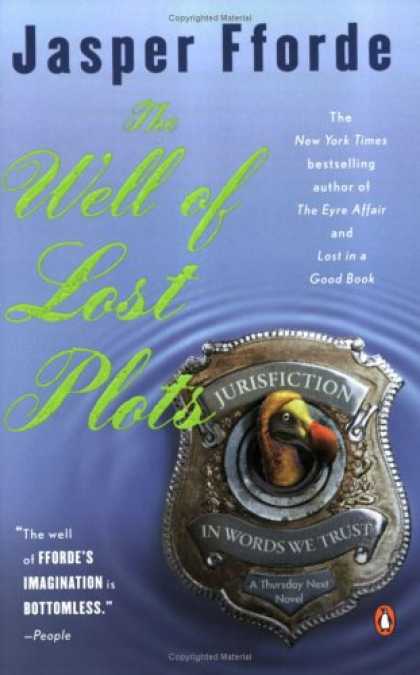
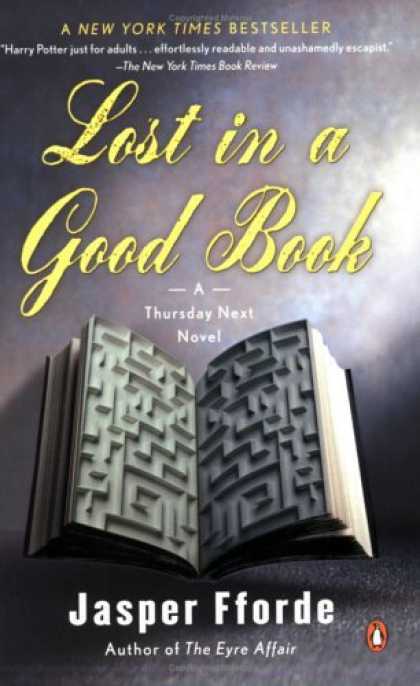
I think I'm going to call this summer "The Summer of the Re-Read." Being too lazy to find new books to read at the library, too cheap to buy new ones and too lazy, again, to write the books I'd want to read, I'm re-reading many of the better books that have passed through my hands in the past several years. I plowed through the rest of Patrick O'Brian's Aubrey/Maturin books at the end of May, demolished all seven Harry Potter books in a scant weekend (even that one impresses me) and am now working through Jasper Fforde's Thursday Next series with my sister in tow.


Let me be frank with you -- Fforde's books are book-reader's books. You know how you have actor's actors? Yeah, well, these are books designed for biblophiles. They're complex, they're filled with jokes and characters pulled from other famous books, and in books two, three, and four, Fforde actually takes you inside the BookWorld where books are supposedly created.

Yes, I know, it's awesome. If I could die and become anyone I wanted to be, living or dead, I'd vote to come back as Jasper Fforde. I can't express how much of a genius I think this man is.

So, while I wait for the fourth Next book to come via Interlibrary loan (I don't own Four or Five, more's the pity) I whipped out a Thursday Next fanfic, because I'm ambitious and slightly suicidal like that. I'm calling it The Hunting of the Sue. It deals with how I think fanfiction might be impacting the BookWorld, which is governed by very specific rules with which the fanfiction world kind of interferes. Coming soon to a Fanfiction Site near you or wherever Archontic Literature is distributed.

Beware the Mary-Sue, my son,
the hands that catch, the eyes that burn
Beware her pretty looks and shun
T’desire to return!

– doggerel attributed to Unitary Authority of Warrington Cat (Cat Formerly Known as Cheshire) after finding a MarySue version of Alice snooping around inside the Looking Glass

Tuesday, May 26, 2009

Tech-word origins: stranger than science | csmonitor.com


I love the Internet. Let's just put that on the table. I love the intertext I can create between the news stories I read on the Christian Science Monitor's website and my Facebook Page. (Or between...well, anything and my FaceBook page, really. I'm surprised no one else I know uses this functionality more.)I love that with the click of my mouse, I can send a recipe to my sister for her to look over. And now I've found a new functionality that I'm pretty psyched about -- any page with a ShareThis logo can now be posted to Blogger in link form!

Tech-word origins: stranger than science | csmonitor.com
Posted using ShareThis

People who read this blog on a regular basis know that I'm really getting into etymology, the study of where words come from. I wrote a term paper about fanfiction etymology, one of my favorite authors routinely borrows words from other languages in his work, and I even went so far as to write an entire fanfic based ariound the linguistic origin of the word checkmate. I am in so deep I have the OED on my bookmarks bar!

So it should come as no surprise that I looked at this article and immediately went "Wow, I should read that!!" But really, works like this do spark my interest, both because I like to learn where certain words come from and because I read science fiction. It's incredible to think that some of the words we use every day were once just a phrase someone made up to fill a void in a story or a conversation.

Like, for instance, this one:

Internet, n. -- [Shortened <INTERNETWORK n., perhaps influenced by similar words in -net (as Catenet (1972), Satnet (1973), Telenet (1973), etc.) after ARPAnet (a wide area network developed by the Advanced Research Projects Agency of the U.S. Department of Defense, attested from 1971). In subsequent use denoting the global network, probably greatly reinforced by use in the compound Internet Protocol.

Originally (in form internet): a computer network consisting of or connecting a number of smaller networks, such as two or more local area networks connected by a shared communications protocol; spec. such a network (called ARPAnet) operated by the U.S. Defense Department. In later use (usu. the Internet): the global computer network (which evolved out of ARPAnet) providing a variety of information and communication facilities to its users, and consisting of a loose confederation of interconnected networks which use standardized communication protocols; (also) the information available on this network.
(Internet etymolgy courtesy of the OED Online -- no copyright infringement intended.)

Friday, March 6, 2009

Public Enemies!

Today the Trailer for Public enemies came out, and I have to tell you, I'm just as excited for this film as I was when I first heard they were filming in and around the city of Chicago. (As a native of the Chicago Suburbs and something of a sucker for Chicago crime history, this piqued my interest immediately)


You can see at least one Chicago landmark, the Great Hall of Union Station, in the trailer.Oh, Union Station, how fond my memories are of you. I remember walking into that room and thinking, "This building was made for films about the 20s." Wonderful piece of Chicago architecture history, something that also fascinates me.

You're probably wondering why I'm writing about a movie trailer on a writing blog, but I promise to make this legitimately about writing (or reading, actually.)

Public Enemies the movie is based loosely on Public Enemies, the book by Brian Burroughs, a wonderful history of America's greatest crime wave, and the personalities behind it, including the fledgling Federal Bureau of Investigations. I read the book back in January, and loved every minute of it -- Burroughs takes a very narrative approach to retelling history, and the non-fiction reads a great deal like fiction, which I suspect is the reason they decided to make it into a movie. It's a little hard to follow at points, probably because Burroughs follows several different criminals, and the G-Men who pursue them, simultaneously; One chapter will deal with Dillinger in September and the next will deal with Baby Face Nelson in the same frame of time, and the next after with Bonnie and Clyde during the same September. Then he returns to Dillinger.

It makes sense to follow the events in this fashion, since Burroughs is writing about these men to show the evolving process (or lack thereof, in some cases) of the FBI, which, during this period, was under the command of J. Edgar Hoover and still trying to figure out what the ideal FBI agent followed in regards to process, how he looked and who he answered to. I'm interested to see Christian Bale tackle Melvin Purvis, the agent responsible for the Dillinger case -- according to Burroughs, Purvis was, like many agents in his day, little more than a pretty face with a Southern accent, a good education, and no clue about how law enforcement really worked. One of the things that I enjoyed about "Public Enemies" is the frank, no-nonsense way Burroughs dealt with the extremely human errors and flaws of his characters -- none of the vast cast of this Depression are heroes in any sense. Bonnie and Clyde are two-bit, second rate criminals put up on a pedestal because they made a good story, Dillinger is an image obsessed playboy, and Hoover is a man in charge of running an agency that has little jurisdiction and little clue about how to use the little power they do have.

So -- Public Enemies. Go read the book. If you like the book, go see the movie! Johnny Depp, Christian Bale, Marion Cotilliard, David Wenham, Billy Crudup, Channing Tatum, Carey Mulligan -- it's a great cast with some great names on it and I'm sure it'll be a great show.