Sunday, August 31, 2008

An All Seeing Eye -- The Big Other in The Bluest Eye

In Toni Morrison's preface to The Bluest Eye, which I'm reading now for Introduction to Peace Studies with Jeff Anderson, she begins by stating this:

"There can't be anyone, I am sure, who doesn't know what it feels like to be disliked, even rejected, momentarily or for sustained periods of time...When this happens, it is some consolation to know that the dislike or hatred is unjustified -- that you don't deserve it."

When I read the first line, I agreed. What kid hasn't been passed over for the kickball team, or the last one to find a buddy for partner time? I know one of my constant complaints as a small child were about being rejected by the other kids in my grade. But when I read that second sentence, I immediately thought one thing:

"She can't possibly mean the dislike I've experienced -- I'm not black. I haven't had to endure the same kind of dislikes she has. Clearly my rejections have not been the same. I'm not worthy to compare the two." And that troubled me.

In my communication class we've learned that when two people have a conversation, there are actually six people talking, three for each of the participants. There is my perception of me (white, middle class, college student, female, brown hair, silly), my perception of you (what you look like, what I know about you from previous conversations, the circumstances we got into this conversation) and my perception of what you think of me (you must think I'm a smart ass for saying that, you look like you don't like my hair, you obviously think I'm racist for saying this.) The same goes for the other party.

Reading a book, I just realized, is much the same way. You approach a text the way you approach speaking to another person. There's what you know about yourself, what you know about the author, and what you think the author wants you to get out of the story. Unfortunately in the case of a book, there is only one person on the other end -- the text itself, unmoderated, unassuming. Of course, we might say that the author has already considered the other side of the conversation when they were writing the book, but that is subject to your interpretation. You are the only lens. Of course, other lenses can be added to the three I've just mentioned -- what other people want you to get out of the book, why you are reading the book (reading for class or reading for fun can totally discolor your picture) what you think other people will think of you for getting what you get out of a book, and dozens more.

There's something Lacanian about all this, some Big Otherish quality that governs the discourse between book and reader. Pre-conditioned responses have already been embedded into my system, and apparently one of them is to step away any time a black author tries to involve me in the shared feeling of remorse and say "But I'm not on the same level as you."

This is troublesome indeed, and I'm not entirely sure I know how to solve that. On the one hand, it is true -- not being picked for the kickball team is by no means the same as being rejected from the social network of your classroom by your peers because you are black and do not look like the beauty ideal of Shirley Temple in any way, as Pecola is in The Bluest Eye.

On the other hand, I think one solution would be to affirm that while the situations are different, they are also somewhat the same, which is what Morrison was trying to do with that opening line of her preface in the first place. By acknowledging that difference and respecting it we can move forward in the discussion. This was something we talked about last year with Sister Mara. In an essay she presented to us, the author of the essay, a white woman who does a significant amount of scholarship on Toni Morrison's work, talked about how she felt inadequate (not quite the right word) when it came time for her to present her work because she wasn't black and therefore couldn't possibly understand Morrison's work the way it was meant to be understood. Eventually, however, she realized she could reconcile this by owning up to the similarities between the experiences of women of both races (backgrounds, upbringings -- I really don't know what word to use here, either, race being a loaded word) and by comparing the differences. By owning up to the difference and respecting it she was able to become more comfortable with the concept.

So yes, Ms. Toni Morrison, Nobel Prize Winner and writer of fantastically good fiction, I do know what it's like to feel like you don't measure up to standards of perfection. I know what it's like to be rejected. Please share with me your thoughts and experiences on the subject. Because that’s the reason we read, isn’t it? We read to understand other people’s experiences more.

Saturday, August 30, 2008

Grammar

In light of the class on linguistics I'm taking this semester, the subject of grammar (which, you should all note, I am not well-versed in) has been pulled into the spotlight, and I've been reminded of this song, which I heard at the beginning of the summer and promptly forgot about.

It's called, appropriately, Bad Grammar, and it's a parody of Timbaland's The Way I Are.

Monday, August 11, 2008

Keys for Writing- Music and other tidbits they won't teach you in class.

I've been writing since the eighth grade, and in that time I've learned a few things that they won't teach you in a creative writing class that help me write pieces that just keep getting better and better. Now bear in mind that these are techniques I use, and while they work for me, they won't always work for you. But it's a place to start.

Before you begin writing, it helps to know something about yourself -- namely, your learning style. As an Education minor, I have to take a lot of classes on teaching and the best ways to teach, and I've found that people process information in one of several ways. You can be an audial learner, a visual learner, or a kinesthetic learner. Once you've determined which one of these you are, it will help to discover which techniques may work for bettering your writing.

I'm a visual learner, which means I like to see things in order to process them. To incorporate this into my writing, I make photocollages or backgrounds to coincide with the piece I have front and center at the moment.
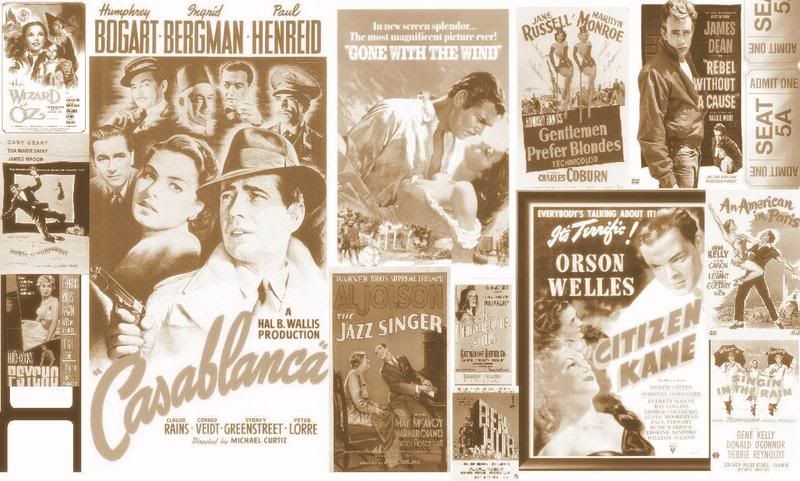
I made this background for a friend, but if you're writing about the golden age of Hollywood, it helps get you in the mood a little bit. An acting friend of mine once told me that one of the things he does to prep for a production is to copy out his script so that each page has a blank side, and put them in a note book. You can fill the blank side with images to help you remember or evoke things on that page of script. This is the same idea.

Since I'm also an audial learner, listening to music or watching a movie is also a great way for me to try and find inspiration. I have folders in my Music Library labeled "Gilded Age Tunes" "Medieval Songs" and "Sea-Sailing Shanties" all filled with mood music for a particular type of story. The Sea Sailing songs? I listen to those when I'm writing Master and Commander Fanfic. As an additional bonus, listening to period appropriate music (like Boccherini when you're writing from the Patrick O'Brien canon) will give you some allusions to make in your story that will really impress readers.

Your music of choice doesn't have to be period appropriate --If listening to death metal helps you write battle scenes, go for it! Find what works for you.

But sometimes, silence is the key. In this day and age where some people can't seem to walk down the stairs without turning on their iPod, I think we often forget that sometimes silence is the most helpful writing tool of all. It gives you space to formulate your own thoughts. I like to write with my window open so I can hear the birds and the wind rustling the bushes and the crickets. That grounds me. What grounds you?

One of my most helpful writing tools is a walk. Yes, a walk. Around the block, to the park, upstairs to refill my waterbottle. Walking gets you away from the material for a little bit and it also recirculates your blood. When you have blood moving to your brain, ideas come a lot easier. Plus, the change of scenery may inspire something. My room is in the basement of my house; I do some of my best writing when I'm upstairs in the kitchen. I'll walk upstairs, make dinner, and while my water is boiling, jot down notes on a slip of paper. The change of scene, along with the recirculating blood, helps.

While we're on the subject of brains, let's discuss water. I always write with a 24 oz water bottle sitting right next to my computer. Why? Because a hydrated brain is a productive brain. They've done studies on students in elementary schools that show that a student's attention and focus will slack off if he or she is not drinking enough water. Your body is nearly 70% H20 -- You need to keep it that way. A dehydrated brain is only thinking about one thing -- NEED WATER. I don't mean go up and pop open a can of Sprite. I don't mean go out and get your favorite Starbucks. I mean water. Plain and simple. Get a reusable water bottle and make your friend Mercury happy by not wasting plastic.

If you're a kinesthetic learner, finding an 'artifact' to help inspire you (such as a certain food if you're writing a feast scene or a piece of fabric when you're trying to write a costume intensive scene) might be helpful. Making a scrapbook page could also help -- cutting out pictures and associating colors can open a host of ideas to you.

These are just a few things that I've found helpful. If there's a technique you've tried in the past that you'd like to share with me, feel free to leave a comment!

Saturday, August 9, 2008

PaperBackSwap

Those of you who know me well will smile and nod when you hear me say that there is nothing I like more than new books. But you know what I like more than new books?

FREE NEW BOOKS!

So you'll understand entirely why this site is now my new favorite --

PaperBackSwap


The concept's pretty simple. You post books that are in relatively good condition that you no longer want, and people across the county look to see if you've got something they want. If you have book B, and Helen wants Book B, she puts in a request. You get an email saying "HEY -- Helen wants Book B!" It will send you an address label with Helen's address on it, and all you have to do is wrap Book B, buy some postage, and ship the book to Helen. When Helen receives the book, she tells the site what a wonderful person you are, and you get one point. One point equals one book. So now I, having my one book point, can go and find a book that I want, send a request, and the process repeats with someone else. GENIUS! I'll gladly pay the three dollars and change for shipping rather than paying six bucks and change through Amazon for the same book.

You know what else is great? This site does DVDs and CDs, TOO!

HOW COOL IS THIS?

You can check this blogger out at paperbackswap under the name mercurygray. If you get an account there, tell them I referred you -- I get points for doing it!

Ciao-
Mercury

Monday, August 4, 2008

I totally want one of these shirts


If you live in Saint Louis or can get there easily, BUY ME ONE OF THESE SHIRTS! They're from the Saint Louis Shakespeare Company, and I can't buy one online...


They're adorable.

Sunday, August 3, 2008

The Passing of one of the big names

RIP Alexander Solzhenitsyn, whose One Day in the Live of Ivan Denisovich wasn't actually that bad of a way to finish AP English.

Solzhenitsyn, chronicler of Soviet gulag, dies

Friday, August 1, 2008

Something to Read

We in the writing business sometimes forget about the people on the other end of our pipeline -- the people in the reading buisness. This is paradoxically absurd, because I know for a fact that many of the people in the writing business are ALSO in the reading buisness.

This man, however, is out to profit both ends of the spectrum--

http://somethingtoread.net/bike.html

It's a project called Something To Read, and if you're in the vicinity of Wicker Park in Chicago any time soon, you should go and see if you can find him. It's the brainchild of Gabe Levinson, and it's attracted the attention of more prestigious pens than mine, like the people at the Chicago Tribune, which ran a rather nice article entitled

A bicycle built for books

in last sunday's Q section. Personally, I think this man is brilliant. He's helping people read. I would, however, give him more brownie points if he were to start the same thing with RECYCLED, SECOND-HAND books.

So, Gabe Levinson, if you're reading this blog, there's an idea for you. (and if you like it, give my freinds at SCARCE a call. I'm sure they'd love to help you. To everyone else, check out his website. He sounds like a pretty groovy guy.

Friday, July 18, 2008

The Business of Naming Characters

I received this in an email this morning and thought all of my readers could appreciate it.


"A writer is somebody for whom writing is more difficult than it is for other people." - Thomas Mann

And so we find ourselves discussing names, something that most people seem to take for granted. But characters with really awesome, iconic names, like Indiana Jones and James Bond, names that have themselves become a hallmark of good stories and a brand name of sorts, did not just spring into being overnight. Their authors and creators thought about them for a long, long time.

As the recent celebrity baby boom can attest, choosing the right name for your child (or character,) can be made into a big deal. And well it should be -- a name is a very, very important part of a person's identity, and something so sacred that in some cultures it is customary to give a child two names, a public one and a private name that only members of the family know or use.

One of the first hallmarks of a Mary Sue is a name -- normally when I see a story summary involving a girl named Serena Adelina Starchaser I run screaming in the opposite direction. It's too much, and who decided that Serena and Selena and Crystal and Mykenzye were all great names for a protagonist, anyway? And if you're naming your child Zaphod Beeblebrox, what kind of parent are you going to be when that child is old enough to hate you?

So, when you get around to naming a character, there are a few things to consider.

First, the gender of your character. I know this sounds kind of obvious, but I have a problem reading about a boy named Sue and a girl named Fred. Especially if you're writing a historical type story, the gender of the name is very important. Girls were not named Christina and called Chris in 1900 -- they were named Christina and stayed Christina.

That leads me to my next point -- time period appropriateness. I'm in the middle of writing a story that takes place during the Second Crusade, in approximately 1185. I cannot name my character Crystal. It will not work. However, most of the under fifteen crowd seem to think that Crystal is the coolest name on the planet and will insist on naming their Crusader's daughter Crystal. My character's name is Audemande, because back in the 12th century, names like Agnes, Audemande and Hildegarde were hot sellers.

Think about what the primary literary influences of the period were. In my case, it's the Bible and the occasional Roman-Latin leftover like Sybilla. Hannah, Agnes, Anna, and Miriam are all appropriate choices. Crystal will only work if your character is a scion of anyone after 1990. End of story. If a major historical figure has that name, chances are it will work for you. Do you see a bunch of queens named Crystal running around? I don't either.

(By the way, if your name is Crystal, don't think that I have it out for all people with that name. It just bothers me when Fanfiction authors seem to think it's the be-all and end-all on cool names. There are so many more.)

After considering that, look at geographic location. Let's return to my Audemande example. Audemande is from Poitou, a region in southwestern France. Originally, the character was named Godeleve, but Godeleve is an English name, and not appropriate for someone who speaks Occitan French. Crusaders generally came from France, Italy, Germany, and a very few from Spain (which was under the control of the moors for some time during this period) and England.

If you're writing a sci-fi or fantasy character, all bets are off. The rules that I've given here do not apply, but there are others that do. Think about cultural associations with your names -- in Dune or Star Wars, most of the characters have kind of wild names like Mace Windu and Liet Kynes or only moderately wild names like Luke Skywalker and Paul Atredies, also called Muad'Dib. Don't go around naming your Star Wars characters Tessica Clouddancer or something because 'It sounds like Skywalker!' All Clouddancer sounds like is camp, kitsch, and My Little Pony. And honestly, if you've got pink plastic ponies in your Star Wars story, you need help. And Tessica? It sounds like Tapioca to me.

When I talk about cultural associations, I mean researching the foundation the author of your fandom (or yourself, if it's an original character) meant for the characters. In Lord of the Rings, the Saxons were a base for the Rohirrim. So, I've got Saxon names for my Rohirric characters. In Dune, the Arabs and Muslims play a big role in the culture of Arrakis and the Fremen, which is why the characters go around shouting Arabic exclamations and going on jihad.

On the subject of using your own name, for any story, realistic or fantasy, my advice is this -- DON'T. When people criticize your character, it'll feel too much like they're criticizing you. I've used diminutives of my name and even stayed in the same letter province (my name, both online and in real life, begins with an M) but I've never used my real name in a story.

The meaning of a character's name generally means little to a reader of fanfiction. Unless someone in your story makes a joke about how your character Colomba (which means 'dove' in Latin, for the record) always wears white and looks like a dove, then don't bother with heavy handed name symbolism. Your character's name is not something they gave themselves (unless in very exclusive cases) and therefore is only a very pale reflection of the essence of that character.

Let's do a quick drive-by of characters that I've written and why I named them what I did. This is a chronological list, more or less, so you can see how the pattern changes.

Gabrielin -- LOTR. An elf of Mirkwood. This is one of my earliest characters, which is why her name doesn't fit with the generally accepted naming scheme of LOTR characters. I thought it was a pretty name when I discovered it, and decided to use it. She also appears in a Harry Potter story I wrote as Gabrielin Malfoy. In that case, Gabrielin is perfectly appropriate for the Magical world; a little strange and oddly mystic sounding, she fits right in with the Minerva McGonagalls and Hermione Grangers of the wizarding community.

Rhoswen -- LOTR. A woman of Gondor. Here is a name I chose because of its meaning, White Rose, and whose meaning does come up in the story; She is a very beautiful woman and is called the White Rose of Gondor because of that. Boromir (her love interest) also makes many references throughout the story to tending flower gardens and pruning rose bushes because of her name. Since this is a fairly obvious comparison, I didn't draw too much flak over it. In fact, Rhoswen's one of my best loved characters.

Phaetis -- Homer. A daughter of Apollo who goes to Troy to fight with the Greeks. Phaetis is a character many of my readers don't know about because I'm one of the only people on the planet who enjoys reading Homeric epic poetry. She's a Greek, she gets a Greek name.


Gabrielle Campion -- National Treasure. Gabrielle is a woman of the 21st century, so she gets an appropriately 21st century name. Her family's French, so her name is also, appropriately, French.

Astrid Sigurd's Daughter -- A Norsewoman and heroine in the epic style. Astrid is an original character I wrote for an independent study project in high school. Her story was a 43 page epic poem written in the style of Beowulf, so like Beowulf, she needed to have a suitably Scandinavian sounding name. Some of the other characters in this story didn't fair so well on the accurate naming front. The prince she rescues is named Aracin, which is Welsh. I probably should have named him Hunlaf or Gunnar.

Margaret Ramsden-- Narnia. A college student with Peter. Margaret was born in the 1920s in England, so her name had to be one of those old English standby names that come up tirelessly from 1200 to 2000. Anne, Margaret, Jane, Elizabeth. All safe bets when you're naming an English character. My name is also a diminutive of Margaret, which added to the allure of writing an almost self-insertive character. My readers, of course, didn't know that.

Meredith Lords -- POTC. A pirate captain in the Caribbean. Meredith is a name I love immensely, so I had to use it for my spunky, spitfire POTC OC. Another name chosen for the period-appropriateness of it.

Mercy Otis Warren Gates -- National Treasure. Ben and Abigail's daughter. Anyone with any American history background at all will be able to point out the proclivity to American colonial historical figures as names for the Gates family. Benjamin Franklin Gates, Patrick Henry Gates, you get the picture. Mercy Otis Warren was a female playwright during the American revolution, and her brother, James Otis, was a prominent figure as well.

Rhiannwyn -- Narnia. The daughter of the Queen under the Mountain. In a name taken from Welsh Myth, Rhiannwyn is based on a character I rp'd with for many years, Rheas. Since the name of the mother of the founders of Rome wasn't quite Narnia-fied yet, I chose something that sounded similar and had a few more mystic associations for this Daughter of the Sun.

Procne -- 300. A Spartan woman. Another character a lot of people don't know about (because unlike her sister Phaetis, she's never been published) Procne is a name taken from Greek myth. I don't remember which one, because that part wasn't important.

George Darcy -- Pride and Prejudice. Darcy and Elizabeth's son. The Regency is also known as the Georgian Period, because during that time two Georges, the 3rd and 4th, were ruling. There's also speculation that Fitzwilliam's parents were named George and Anna (hence Darcy's sister, Georgiana) so the practice of borrowing praenomen would also apply here. The only male OC on this list, he's very near and dear to my heart.

Evelyn Langford -- Dead Poets Society. Evelyn's family comes from a lot of money, so it's right and proper that her name's a little pretentious. She goes by Evie (partially because it's easier to type and partially because I love Rachel Wiesz's character Evie O'Connell in the 'Mummy' films) most of the time.

Aleybis -- Narnia. Ramandu's daughter, a Star. Naming a pre-existing character is hard work, mainly because there had to be a reason the author didn't name them in the first place, and you're afraid of what everyone will think of what you do decide to call them. This is a name I came up with off the top of my head and decided sounded pretty. Being a Star, it had to sound foreign enough to be Narnia-fied, but easy enough to pronounce. This name sounds vaguely Dutch to me, but I've googled it and the number of responses (15) to my query have assured me it's not a common name.

Beth Danderidge -- Age of Innocence. A debutante of 1900s New York. Beth was a character that popped into my head without a name, and as such, got one of those good standbys to use when finding a historical name is a little hard. The turn of the century is difficult because it's too late to be true Victorian, and not really Edwardian yet either. As for her last name, well -- she's inheriting a rather large sum of money. She's entitled to a frivolous last name like Vanderbilt or Danderidge.

Portia Demetrios -- Batman Begins, Dark Knight -- My Batman OC, Portia's another character who needed to show a little nationality in her name. If you didn't get it, her family's Greek. Portia's also a name I admire for the women who've borne it before, namely Shakespeare's two heroines, Brutus's wife Portia in Julius Caesar and Benvolio's love interest Portia in The Merchant of Venice. A name that inspires powerful images, Portia's position as the head of a multinational company backs up her name.

There are lots of tools to help you name a character. The dozens of baby naming sites and random generators you'll find on the web are good to start with, but also sites like Saint Gabriel and The US Census Bureau will help you with period appropriate lists. (For common names in a certain decade, I use this site -- http://www.weddingvendors.com/baby-names/)

After you've gotten your first name down, the last name is just as important. Some characters will not have last names, because believe it or not, they're a fairly recent innovation. Before about 1300, most characters would have been called by their father or mother's name (Astrid Sigurdsdottir) or identified by the province they were from or the land their family held (Audemande of Vinceaux, Godfrey of Ibelin) Early last names are also diminutives of personal attributes or occupations. People with the last name Baker...came from a family of bakers.

It's important to pay attention to last-naming cultural traditions, too. It's still common in some Scandanavian countries to continue that Sigurdsdottir/Sigurdson naming. If your character is, let's say, Welsh, you'll have to find a good Welsh last name, like Powlett-Jones, to suit. You can't say your private eye is Spanish and then give him a name like Dave Jensen. Spike Velasco sounds so much more cool.

If you find a name site you like using, bookmark it. I have an entire folder of bookmarks labeled "Writing Refs" for things like last names, first names, language translators, and folk song lyrics. Just make sure that these sites are legit for the purposes you're using them for. Period appropriate names are sometimes hard to find, or worse yet, mislabeled.

So that's naming your characters. Now you're properly armed to enter the wide world of fanfiction with a character who at least has the good sense to have a spiffy (and un-ridiculous) name. And if you see any Crystals walking around, tell them I said hello.

Post-Blog Quiz-- Name three of the books/tv shows/songs I obliquely reference in this blog post. Dune and Star Wars don't count. I'll comment back and tell you if you're right. (Serious Pop Culture Points if you can name find all of them.)

Monday, July 14, 2008

Outsourcing- the New Colonialism

Yesterday I went to see the movie "Outsourced" (See the official site) at the Gene Siskal Film Center in Chicago. If any of you reading this blog get a chance to go see it or see that it's playing in your area, GO. It is a funny, intelligent, well-thought out piece of filmmaking, an independent that looks and sounds like a mainstream romantic comedy with a liberal helping of a few college professors of economics thrown in.

The movie centers around Todd Hamilton, a thirtysomething working as a supervisor in the Wish Fulfillment (fancy term for order-taking) section for Western National Novelty Company, an Oriental Trading post type shindig that sells hokey kitsch (a word that makes an appearance in the film to much hilarity) to Americans across the country. Then Todd's told his job is being outsourced -- and that he has to go train the new call center people to get their MPI (minutes per incident, or amount of time taken talking to the customers) down to six minutes. It's a thankless job, one that involves getting to the small town where the call center is located, surviving some of the local cuisine, and trying to figure out the nuances of Indian culture. He makes friends, falls in love, and gradually learns to like India, a transformation that's shown rather brilliantly in the film by a baptism of sorts in a river and the ensuing changes in the way Todd dresses.

But what makes the film really resonate is the way Todd at the beginning of the movie has a hard time dealing with Indian culture. He wants his employees to sell their kitsch and move on. But there are cross cultural barriers that need to be fumbled over first, and Todd, at the beginning of the movie, doesn't understand that. He's another colonialist, part of the new colonialism -- the outsourcing movement. But the Indian people who are working with him understand that, and they tell him straight out that he needs to understand India if he wants to get this to work, a very post-colonial idea. One of the characters (the future love interest) stands in in a staff meeting after Todd has just told them they need to learn to speak English and tells him, flat out, "English is the first language of the government here in India. We got it from the British and so did you."

Todd does some other colonizing, too -- he sets up an incentive program to push the MPI down by using some of the products that the employees are selling, like a Packers cheesehead (which he has a hard time explaining the use of at a staff meeting) and a hot dog cooker. His boss calls him angrily after he's placed the order and asks him why he should ship these products half way around the world. Todd replies "Because I want to introduce them to a market of about a billion people." The boss then replies, cool as a cucumber, "I can have them there by Friday." Just like the British, Todd and Western National are conquering to open up new markets.

Bottom line, Outsourced was a great movie with a message for people who wanted to find it and a good story and some first-rate comedy for those who just want to sit and eat their popcorn. It's on my list of DVDs to purchase now.

Wednesday, July 9, 2008

Keys to Writing Good Historical Fiction

Okay, we've covered how to write a good review. Now we have to get down to the writing task, and I'm going to talk about something that I know a little bit about: Writing good Historical Fiction.

Now obviously the best people who write about historical things are the people who were there. No one, repeat, NO ONE, will write the Regency like Jane Austen and William Makepeace Thackaray did, because -- big surprise here -- they lived it. C.S. Forester and Patrick O'Brien will draw close seconds, but no one can compare to the originals.

But we love writing historical fiction. I love reading it. I'm not just talking about novels, I'm talking about fanfiction, too. Jane Austen fanfics get published all the time. And there are some things to consider when we consider those fanfics and our humble little offerings.

There are two things standing between the Jane Austen section at ff.net and the publishing house at Scholastic.

One is volume of content.

The other is research. Yes, research, ladies and gentlemen, that lovely word that sends college students scurrying to their corners and high school teenagers screaming to their teachers about how hard the class is. Nothing ruins a historical peice faster than to find that someone has not done their research-

I hate to rain on an otherwise very promising and enjoyable passage, but paper bags weren't invented (or in wide use, sources seem to differ) until the early 1850s. Their pastries would have simply been wrapped in paper and then placed in a basket one of the woman probably had brought. Ah, the good old days before the epic paper or plastic bag decision. Anyway, small note, doubt anyone else besides me noticed, still a very cute passage.

Yes, that is an actual review by me, and yes, I did actually go and look up when paper bags were invented because it bugged me. And I'm not the only one. So here are a few things to consider when writing in a historical context.

  • MONEY- It will make a big difference to your story whether people are carrying around Bank of England notes or gold bezants. Find out what people were using for money -- a 'gold coin' isn't going to impress your readers as much as florins, guiders, and guineas are. Especially if you can find how they convert to today's money.
  • MODES OF TRAVEL- Nothing breaks up a good history more than "The hero left town, and using his horse, traveled across all of England to arrive with his battalion the next night on the opposite coast."A horse does not travel that fast. Find out how people are going from point A to point B, and how long it's going to take to get there. Edith Wharton makes a big to-do about the Brown Coupe people take home from the Opera, and John Steinbeck's Grapes of Wrath wouldn't be the same without the beat-up car they drive around in. Transportation is everything.
  • CLOTHES. A skirt is de rigeur attire for women from William of Normandy to the D-Day invasion of Normandy, but skirts have changed a lot in that time frame. Find out what your people are wearing, down to their shoes and underwear! (This just in -- people did not always have Hanes.) This is the fun part, because you, the author, get to look at lots of pictures! You can watch movies, too, but any period film before, say...the advent of Technicolor film is bound to be a little iffy on period accuracy. The more recent (and big budgeted) the film, the more accurate the costumes will PROBABLY be. There are no guarantees. Your best bet is still books. This is also a really good way to immerse yourself in the culture -- how women and men are dressing will tell you a lot about acceptable behavior. For instance, you can't run in a floor length skirt. Believe me on this one -- I've tried.
  • MUSIC- Find out what the favorite tunes were. The mood alters significantly if you're playing Flo-Rida as opposed to Frederic Chopin. If you can find it, listen to it while your writing. I'm in the middle of a story about the Crusades and I've been listening to Gregorian Chant, Provencal chansons, and the Kingdom of Heaven Soundtrack until my headphones were tired. Music is evocative -- use it and muse it.
  • PASTIMES -- People did not always have monopoly for rainy days. When you were bored, you could not always pull up a game of solitaire on your computer. Chess is a good standby, but there are other games. Cards have been popular since the 1400s, but Poker and Go Fish were not always the games of choice. Find out what people did when they weren't talking to each other and moving the plot along. Who knows -- they could do this activity AND move the plot.
  • RANK AND POSITION WITHIN SOCIETY. Believe it or not, doctors were not always as respected as they are today. In the 1700s, for instance, many 'doctors' (or physicians, as they were then called, were quacks and the real medical know-how came from men called barber surgeons. Find out who's who, and why.
  • FORMS OF SPEECH AND DEPORTMENT. Somehow I can't see Mr. Darcy greeting Charles Bingley in a ballroom with a hearty "Yo, Whaddup, dawg?" and pounding it like some young men would do today. It's just not done, to use the Wharton phrase. People today do not talk the way people did hundreds of years ago -- you need to remember this and implement it. If you use a phrase with your friends, chances are you DON'T want to use it with your characters. If you have trouble with this, go to the original source. Maybe you don't know how people talked during the Civil War, but I'm certain Mr. Mark Twain does.
  • POLITICAL STRUCTURES. It makes a big difference in a story if there's a monarchy or a democracy or a communist Soviet in place. Find out who was ruling who (and how they were doing at it) before you begin writing.
  • CURRENT EVENTS. Nothing warms my heart more than to see small and often stupid references to things that would have been going on in the world at the time. If you're character is in a bar during the 1910s, how's the war going? (Props if you asked yourself which one.) Have we whooped the Kaiser yet? How are the Bolshies doing? Have those darned Irish stopped making a fuss about independence already? (Those were the three conflicts I can think of from 1910-1920, anyway.) If it's set in the 1830s, are your characters discussing how wrong they think it is that a woman (Victoria) is in line for the throne and will probably get it? Things like this really set the scene for the rest of what's happening, and they set the tone of your characters actions.
Finally, and very importantly, that Elephant in the Room,
  • GENDER ROLES. We live in a very different world from the heroines of Charlotte Bronte, Edith Wharton, even Sylvia Plath, and unfortunately, women have not always been able to run around in combat zones (they're still not really, actually) and run businesses and represent people in Congress. Additionally, men were once upon a time very concerned with how they dressed and being 'fashionable' and caring about exactly how you looked was not always considered 'gay' as it sometimes seems to be labeled nowadays. Find out how people were expected to behave. Were women allowed to read at this point in history? Were men allowed to date a girl without asking her dad first?
Hopefully this list has given you some ideas to think about, perhaps not for a first copy of a story, but maybe for a revision or editing of a previously published work. This is what separates the published authors from the unpublished ones. It's called Research, and it is hard work.


Tuesday, July 8, 2008

Response to Big Books read

A person whose opinion I value highly has just pointed out to me the flaws of my reading of 46 books on the big books read list, and I think I should perhaps point out some things that will skew that data.

Of the 46 books on the list, only 28 of them I chose to read by myself. (yes, ONLY 28. I'm very strange like that) Some of them are children's books. Some of them were books I only read to acquaint myself with the movie, which was starring one of my favorite actors. (Anna Karenina, which I dislike thoroughly along with most of Tolstoy's work, springs to mind)

And certainly I thought there were a lot of books that I've really enjoyed and considered great literature that weren't on there, and some books that I didn't think were great literature were on there anyway. Edith Wharton was sadly not there- I love The Age of Innocence, and the fact that it won a Pulitzer could matter less to me. I think it's great, evocative writing.

On the issue of black authorship, I will be the first to admit that I am highly deficient in that subject, mainly because I have not been exposed to much of it. The only book I read by a black author in school was Beloved, by Toni Morrison, which, while a great work of writing, I didn't enjoy reading at all. I do not think I would ever be prompted to read one of her books again on my own because, simply put, the first one did not move me.

One author I'd be delighted to read more of is Ernest J. Gaines, whose Lesson Before Dying was a stirring and beautiful peice that, if memory serves, caused me to tear up a little. He is not on the list, but his book was brilliant. So also was his 'A Gathering of Old Men' which was a great piece and just a cool exercise in trying to piece together a narrative from the viewpoints of many different people. I read both of those books because a teacher recommended them to me after we read part of A Gathering of Old Men in a Creative writing class and I mentioned wanting to read the rest of it because the subject and style interested me.

Last Semester with Sister Mara we read an article about a white scholar doing academic work with Toni Morrison's work and her novel Sula kept coming up. Several interesting quotes were raised and I might, if my summer permits, read that. I've been on a memoir-non fiction streak so far; I read the last two of Frank McCourt's memoirs, Reading Lolita in Tehran (which was amazing) and am now trying (and failing) to get through Queen Bees and Wannabes, the book that inspired Mean Girls. The Bookseller of Kabul is another book that is on my list, along with anything else I'll pick up at the book rescue where I'm volunteering.

People often say "Don't judge a book by it's cover." Perhaps I should try "Don't judge a book by the picture on it's dust jacket."

Friday, June 27, 2008

Big Books Read-

cross posted at HMS_Mercury


Taken 'cause Karen asked me to.

The Big Read reckons that the average adult has only read 6 of the top 100 books they've printed. Well, let's see.
1) Bold the books you have read.
2) Italicize those you intend to read.
3) Underline the books you LOVE.
4) Copy, paste, & repeat.
5) Starred next to the books you're reading/have read some of.


1 Pride and Prejudice – Jane Austen
2 The Lord of the Rings - JRR Tolkien
3 Jane Eyre - Charlotte Bronte
4 Harry Potter series - JK Rowling
5 To Kill a Mockingbird - Harper Lee
6 The Bible*
7 Wuthering Heights - Emily Bronte*
8 Nineteen Eighty Four - George Orwell
9 His Dark Materials - Philip Pullman
10 Great Expectations - Charles Dickens
11 Little Women - Louisa M Alcott -
12 Tess of the D'Urbervilles - Thomas Hardy
13 Catch 22 - Joseph Heller
14 Complete Works of Shakespeare*
15 Rebecca - Daphne Du Maurier
16 The Hobbit - JRR Tolkien
17 Birdsong - Sebastian Faulks
18 Catcher in the Rye - JD Salinger
19 The Time Traveller's Wife - Audrey Niffenegger
20 Middlemarch - George Eliot
21 Gone With The Wind - Margaret Mitchell
22 The Great Gatsby - F Scott Fitzgerald
23 Bleak House - Charles Dickens
24 War and Peace - Leo Tolstoy
25 The Hitch Hiker's Guide to the Galaxy - Douglas Adams
26 Brideshead Revisited - Evelyn Waugh
27 Crime and Punishment - Fyodor Dostoyevsky
28 Grapes of Wrath - John Steinbeck
29 Alice in Wonderland - Lewis Carroll
30 The Wind in the Willows - Kenneth Grahame
31 Anna Karenina - Leo Tolstoy
32 David Copperfield - Charles Dickens
33 Chronicles of Narnia - CS Lewis. I own them now. :D
34 Emma - Jane Austen
35 Persuasion - Jane Austen
36 The Lion, The Witch and The Wardrobe - CS Lewis
37 The Kite Runner - Khaled Hosseini
38 Captain Corelli's Mandolin - Louis De Bernieres
39 Memoirs of a Geisha - Arthur Golden
40 Winnie the Pooh - AA Milne
41 Animal Farm - George Orwell
42 The Da Vinci Code - Dan Brown
43 One Hundred Years of Solitude - Gabriel Garcia Marquez
44 A Prayer for Owen Meaney - John Irving
45 The Woman in White - Wilkie Collins
46 Anne of Green Gables - LM Montgomery
47 Far From The Madding Crowd - Thomas Hardy
48 The Handmaid's Tale - Margaret Atwood
49 Lord of the Flies - William Golding- I hated this book with a firey passion.
50 Atonement - Ian McEwan
51 Life of Pi - Yann Martel
52 Dune - Frank Herbert
53 Cold Comfort Farm - Stella Gibbons
54 Sense and Sensibility - Jane Austen
55 A Suitable Boy - Vikram Seth
56 The Shadow of the Wind - Carlos Ruiz Zafon
57 A Tale Of Two Cities - Charles Dickens
58 Brave New World - Aldous Huxley
59 The Curious Incident of the Dog in the Night-time - Mark Haddon
60 Love In The Time Of Cholera - Gabriel Garcia Marquez
61 Of Mice and Men - John Steinbeck
62 Lolita - Vladimir Nabokov - I'm going to start reading "Reading Lolita in Tehran"- does that count?
63 The Secret History - Donna Tartt
64 The Lovely Bones - Alice Sebold
65 Count of Monte Cristo - Alexandre Dumas - I appreciate the movie versions of these books so much. otherwise it just drags on and on and never finishes! HAVE YOUR REVENGE ALREADY, DANTES!
66 On The Road - Jack Kerouac*
67 Jude the Obscure - Thomas Hardy*
68 Bridget Jones' Diary - Helen Fielding
69 Midnight's Children - Salman Rushdie
70 Moby Dick - Herman Melville
71 Oliver Twist - Charles Dickens
72 Dracula - Bram Stoker- Epistolatory novels make my day full of rain clouds and the desire to kill the people who write them.
73 The Secret Garden - Frances Hodgson Burnett
74 Notes From A Small Island - Bill Bryson
75 Ulysses - James Joyce
76 The Bell Jar - Sylvia Plath
77 Swallows and Amazons - Arthur Ransome
78 Germinal - Emile Zola
79 Vanity Fair - William Makepeace Thackeray I got through about half and love the 2004 movie. That was the summer I read War and Peace; I was sick of big books.
80 Possession - AS Byatt
81 A Christmas Carol - Charles Dickens
82 Cloud Atlas - David Mitchell
83 The Color Purple - Alice Walker
84 The Remains of the Day - Kazuo Ishiguro
85 Madame Bovary - Gustave Flaubert
86 A Fine Balance - Rohinton Mistry
87 Charlotte's Web - EB White
88 The Five People You Meet In Heaven - Mitch Albom
89 Adventures of Sherlock Holmes - Sir Arthur Conan Doyle- most of them, when i was about twelve and too young to follow what was going on.
90 The Faraway Tree Collection - Enid Blyton
91 Heart of Darkness - Joseph Conrad
92 The Little Prince - Antoine De Saint-Exupery- I hate this book. I had to read it for french TWICE.
93 The Wasp Factory - Iain Banks
94 Watership Down - Richard Adams
95 A Confederacy of Dunces - John Kennedy Toole
96 A Town Like Alice - Nevil Shute
97 The Three Musketeers - Alexandre Dumas
98 Hamlet - William Shakespeare Several times. I love Hamlet.
99 Charlie and the Chocolate Factory - Roald Dahl
100 Les Miserables - Victor Hugo

Karen, I see your 32 and raise you 14. 46 books out of 100.

Damn. I must not read much current stuff....

Thursday, June 26, 2008

Why I have a Problem with fanfic 100

On-line lately there has been an outpouring of LJ communities who specialize in doling out 100-prompts, little ideas that you, the author, are supposed to execute in 100 words.

I have a problem with these.

Why?

Because that's not a story, that's a snapshot. Heck, that's not even a snapshot; a picture's supposed to be worth a thousand words, ten of these little...woodles, as I call them. I've been noticing on my RSS feed of recently updated C.S. Lewis stories that more and more of these are being done, and I think you should up the word count to at least a thousand. It's not that hard to write 1000 words. Anthony Trollope forced himself to write 3000 every DAY.

I know that in the world of college essays and timed writing, word counts are getting to be more and more of an issue, to make it easier on your professors and graders. But a story has no word limit- God does not say, please live your life in this many years or less, otherwise points will be docked. I tell a story until I am done telling it, or it is done telling me what to write. And in the long run, only writing 100 words leaves you no practice for developing character, sustaining plot, or taking in a whole moment. It narrows your vision, forces you to find the barest of details to set a scene. You shouldn't limit yourselves to a mere 100 words. It's only a tenth of the picture, and your reader wants to see the whole thing.

Friday, June 20, 2008

Keys to Writing A Good Review

Just as a lark the other day, I checked several of my more recent stories to see who on ff.net had me on story alert, a feature that sends you an email message when an author puts up a new chapter.

What surprised me was that there were several people on that list who have never REVIEWED the stories in question, part of that elusive online community we call Lurkers, people who read but don't comment, who favorite but never tell you why.

So I decided to write a note in my next chapter asking these people to review, because I like knowing why or how I've entertained them. And this was one of the replies I got:

"I'm afraid I'm not a very good reveiwer, but I'll do my best."
Not a good reviewer? What sort of polluted world do we live in? All reviews are good reviews; there are just some that are better formulated than others. So with that in mind, I'm going to publish

MERCURY GRAY'S KEYS TO WRITING A GOOD REVIEW


Now this is a really simple format to writing a review, and it comes in three parts, just like Aristotle says stories should be. A Beginning, or Exposition, A Middle, or Body, and an End, or a Conclusion. Yes, Aristotle had to lay that out in his Poetics. I guess the Greeks didn't quite get it.


Start the review off your initial impression after reading. This is normally one word, like "WOW." or "Hrm." Pair this with something that really knocked your socks off, a particular phrase or image they used. If there's several things, list them! Explain why you think this worked particularly well or how it made you think of something else. Writers like to hear that you understood their humor, got their inside jokes, etc.


Then, tell them nicely what you didn't like, or what you thought didn't work well and could be changed. Give a suggestion here, and if you don't have one, apologize that you don't. If you're not going to suggest a solution to their problem, it's not helpful to have you point it out. A Phrase like:
I liked this...but I think you could change it in this way to make it better...

works very well. Be polite at this part; writers don't particularly like criticism if it's not given nicely. But lots of writers will thank you for pointing out errors in spelling, punctuation, and lost capital letters if you phrase it right.


Last, sum the review up with another really strong point. You want to end the story on a positive note. Talk about the tone, the narrative voice they used, or a particularly good ending line and how it really helped with the feeling of the story. Tell them if you're looking forward to their next post or how they really did a nice job with this story, and you're done!


That's not really that hard, is it? It just takes a little time to think about. But, writing these reviews also helps you as a writer- thinking about suggestions for other writers will often jumpstart your own stories, and seeing what does and doesn't work for other writers will help you find what does and doesn't work in your own writing.

The format of this review is to help and encourage writers. I learned this format in a speech class in which everyone was doing something that's really hard to do: get up in front of a large group of people and speak. There are estimates that 80% of the adult population has, at one point in their lives, dreaded making a speech. Writing is much the same way. It's hard to expose something that you've worked really hard on to public criticism, and sometimes you get mean, nasty reviews telling you that your work is crap and that you are a nasty, horrible person. No one wants to hear that.

So please, take these keys seriously and I think that we can make ff.net and other writing sites nicer places to be.

Monday, June 16, 2008

The Monday Update

I've posted a new chapter of A Jewel in the Crown and a new chapter of Outrageous Fortune. I'm too lazy to put links in, so you'll have to use the sidebar.

Friday, June 13, 2008

Page Changes

If you check out the links box, you'll see a new link to my Deviant Art page. There's not a lot of stuff there, but it's all pretty cool.

While you're at deviant art, you should check out the page of my new friend, Mira Dzialynska.
She's from Poland, and she's just done a piece for my PC fanfic of my main character, Aleybis. It's really pretty, and she did a really nice job. So you should all go and tell her this.

Tuesday, June 10, 2008

follow up to Advice to Young Writers

Okay, so you remember a few posts ago I gave a transcript of a really long review I left some poor soul on fictionpress?

Well, she asked me to beta-read for her. Good, yes?


she hasn't sent me anything yet. That was a week ago. I think I should private message her and tell her the hallmark of a good writer is to write ALL THE TIME.

Assorted items

Item One- I have found a new muse!

Neil Perry, from Dead Poet's society. Which leads me to item two-

Item Two- New DPS fanfic up on FF.net. It's called Outrageous Fortune, and you can read it here. It's all Neil's fault. Really.

Item Three- New chapter of A Jewel in the Crown is also up on FF.net. You can read that HERE

Item Four- I have a new favorite piece of classical music- Beethoven's 9th symphony. Genius!

Friday, June 6, 2008

YES!

Scribe in talks for "Dune" resurrection

By Jay A. Fernandez 1 hour, 13 minutes ago

LOS ANGELES (Hollywood Reporter)- We have wormsign.

Rookie scribe Josh Zetumer is in negotiations to write the latest incarnation of "Dune," Frank Herbert's sprawling sci-fi epic, for Paramount Pictures.

The award-winning 1965 novel -- the first in a series of six books about a futuristic struggle for control of a precious spice called Melange on the desert planet Arrakis -- was first adapted by David Lynch into a financially and critically disastrous 1984 film (though Herbert apparently liked it). It also was turned into a more successful Sci Fi Channel miniseries in 2000.

No one involved would comment on Zetumer's take on the "Dune" saga.

Herbert's son, Brian, and Kevin J. Anderson, who have co-written several additional "Dune" novels, will co-produce. Peter Berg ("Friday Night Lights") is attached to direct.

Reuters/Hollywood Reporter


I LOVE THESE BOOKS!

Thursday, June 5, 2008

Wake Up, Little Susie

New PC fic (yeah, I know, another one.) called Wake Up, Little Susie up now on ff.net

HERE

and here's the song featured in it! Yay for the Everly Brothers!


Wednesday, June 4, 2008

Advice to Young Writers

I just left a killer long review of someone's story, and I feel like this is advice every young writer needs to hear.

Well, you asked me to review, and so I shall. I think the dialogue in this story is your main strength, but the strengths of this story are outweighed and overwhelmed by the things you need to fix, like your spelling and punctuation.

Before you put a story up, it should be a given that you've checked it over to make sure your sentences start with capital letters and you have basic proper punctuation. Normally when I see a story without proper punctuation I stop reading and forget about leaving a review, because if the writer can't take their own story seriously enough to proofread, I'm not sure I want to waste my time.

When someone stops speaking in a sentence and a period is required, you need a comma. "Like right now," the Wordsmith exemplified. But there's a lot of ways to end a sentence, and that comma rule doesn't work all the time. If you know someone who's a really good writer, like an English teacher or an older sibling who's taken a lot of English classes, ask them to explain the rules to you, because frankly, they're really hard to explain over the Internet.

The other major problem I see with this story is that your beginning is a little...amateur. You need a good beginning to hook your readers in, and no real writer begins their story describing the physical attributes of their characters. It's boring! If they're well written, people aren't going to need to know what they look like, only how they act and feel. The way a character looks is only secondary to the story, and doesn't need to be described in detail unless it's somehow related to the plot.

And speaking of plot, I'd like to know where this story is going. You have a nice little summary for it, but it's the end of the first chapter and I wouldn't know what the story is about unless I read that summary. You need to introduce a problem, or a hint of what the problem's going to be, before you can start trying to be funny or describe the daily lives of your characters. What does this gum incident at the end have to do with being pregnant? Is it the gum's fault that the girl is pregnant? I know that sounds like a stupid question, but authors always have to have a reason for putting something in a story, and right now, I'm not seeing what the line of reasoning was.

So I'm sorry for the long and angry review, but I mean it all in the best way. All authors have to go through a phase like this one, and the best thing to do is keep writing, and also keep reading. The reason I'm giving this advice is that I really wish someone had told me all of this stuff when I had started writing.

The best writers, I've been told, are the best readers as well. when you read, you find out what you like, as well as what you don't like, and you can see how real, published authors write, set up plot, and treat characters.

So keep going, and keep reading. You might your next big idea.
I didn't know how long I'd been writing until I realized how good my writing actually was compared to the twelve and thirteen year olds of the world who are just starting. I've come a long way since then.

Crazy psuedo feminist poem

Merc's new crazy pseudo feminist poem (and in the women's right's 60s feminist kind of way, not the way Professor Steve keeps trying to explain that I still, after an entire semester, don't understand) is up now at allpoetry. It's called Don't You Honey-Baby-Sugar-Sweetheart Me.


And you can read it here!

Or here on my fictionpress, if you'd like to leave a comment and you don't have an allpoetry account.

Tuesday, June 3, 2008

New Story

A new PC fic, That Word Honor, about Peter and Edmund returning to school and a world at war with quite a different tyrant than the ones they're used to fighting, is now up at ff.net.

You can read it here!

It involves a song from my research project on radio propaganda, Edmund ranting on Hitler and the nature of war, and a very surly Peter.

Sunday, June 1, 2008

New Chapter

The second chapter of my new Prince Caspian fic (which is looking like it's going to be a LONG haul, by the way) is up and ready for reviewing at ff.net.

HERE

Friday, May 30, 2008

I'm really terrible

I was just listening to Queen's We Will Rock You on the Knight's Tale soundtrack, and i got to thinking--

Someone should make a fanvid for Prince Caspian and the Pevensies to "The Boys are Back in Town."

*sings* Guess who just got back today - them wild eyed boys that had been away. Hadn't changed, hadn't much to say, but man I still think them cats are crazy...

Wednesday, May 28, 2008

New Prince Caspian fic!

My New Prince Caspian Fanfic, A Jewel in the Crown, is up now on FF.net

Go read it now HERE!

Also-

New short story (or essay, almost) called Death and Time up on fictionpress.com

Go read that HERE!

New Poem

I wrote this poem when I was teacher shadowing a few weeks back- It's called "Ruby Beautiful"

give me ruby beautiful

give me emerald fine

kiss me in the moonlight,

let me know you're mine.

give me diamond lullaby,

give me sapphire song,

rock me on the porch swing,

all night long.

show me that you love me,

show me that you care

whether its with daisies

or diamonds for my hair.

Monday, May 26, 2008

P&P

damn. seems by 1830 Fanny and Charlotte would be 21, not 18 as was previously supposed.


Need to find someplace to put a queen victoria joke.

Sunday, May 25, 2008

Updates

Item One- I no longer hate Edith Wharton, and am seriously considering posting the fiction in question.

Item Two- A new Kingdom of Heaven fanfic, God Wills It, is up now at ff.net (Links bar to your right for direction) New evidence reveals it may be theologically unsound- who knew!

Item Three- Jane Austen wants to take Edith Wharton to town for distracting me away from Husbands and Lovers. Unfortunately, updates on that front seem to be rather sparse at the moment, as George, Fanny, Charlotte, Richard and Co. have decided to take a love nest by the seashore and booze around while I sit and listen to sea shanties at home. Sometimes I hate my characters.

In other news, I may be open to adopting a new muse. Submissions for recommendation are being accepted now; candidates being considered will have to at least have appeared in one of my fanfics or interest me immensely.

Wednesday, May 21, 2008

Edith Wharton, I hate you.

You and Martin Scorsese. You've made me start writing this stupid little fanfiction no one will ever read (because I'm the only person in the world who writes Edith Wharton fanfiction) and what's worse, it's not going anywhere!

----

Travel! They exhorted her. See Europe and all its wonder while you are still young. And she had, staying in London, Paris, Madrid, Berlin, St. Petersburg. She’d seen all there was to see, and then some, until her trunks were tired and their sides were filled with labels from hotels with exotic names- Hotel de Ville, Hoffenhammerplatz Haus, Le Russe Imperial. Then she had bought new trunks, new clothes and traveled more. There were bits of her past all over Europe’s salons and receiving rooms: a forgotten fan at a café in Madrid, a dress left for the maid who had attended to her in Berlin. She had forgotten and purposely misplaced her possessions until nothing remained that reminded her of Jefferson.

Then she had returned home.

The great house on Fifth Avenue seemed either too big or too small – it seemed to depend on the time of day she observed the large front hall and the darkly paneled sitting rooms. Too old, though, her new architectural sensibilities told her, too old and too fusty by half. Remake, remodel, renew, or better still, knock it down! No, no, too soon for that. Her father had designed this house, and she was not about to give him up and change it all at once, losing the only bit of him she had left.

A year later, and they were still cooing over her. Poor Beth, all of New York was saying, Poor Miss Danderidge. Lost her father and then had her engagement broken and then ran off to Europe to recooperate. Poor thing.

That’s the one thing that never changes, Beth, her mother had reminded her when she returned home. the false modesty, the false sympathy, and the false friends of Society. Society is still here, Beth, as much as you wanted it to crawl into a corner and die while you were away. You’ll have to face it sooner or later, Beth. They’ll be expecting you to.